Ask a group of bingo hall operators whether they have a loyalty program, and many will answer "yes."
Ask whether that program genuinely changes player behaviour, and the conversation often becomes more complicated.
The issue usually isn't that rewards are missing—it's that there's nothing for players to aspire to.
If every member receives the same benefits regardless of how often they visit, the loyalty program quickly becomes background noise. Players collect points, redeem an occasional reward, and carry on exactly as before.
The most successful loyalty programs create momentum. They give members a reason to think about their next visit before they've even left the venue.
That's where a well-designed VIP tier system makes the difference.
Rather than rewarding isolated transactions, tiered loyalty creates a journey. Every visit, milestone, and interaction moves players closer to greater recognition, better experiences, and exclusive benefits. For bingo halls and other entertainment venues, this approach transforms loyalty from a simple rewards scheme into a long-term engagement strategy.
Stop Thinking About Rewards—Start Thinking About Progress
Many operators begin designing a VIP program by asking:
"What rewards should we offer?"
A better question is:
"What behaviour are we trying to encourage?"
When the goal becomes clearer, the rewards become easier to design.
For most bingo halls, those behaviours include:
- Returning every week
- Joining themed events
- Bringing new players
- Staying active throughout the year
- Participating in fundraising nights
- Becoming part of the venue community
Your VIP structure should make each of these behaviours feel worthwhile.
Why Players Care About Status
People naturally enjoy earning recognition.
It's why airline passengers chase elite status, gamers unlock achievements, and coffee lovers work towards premium membership.
Status creates motivation because it combines three powerful ideas:
- Progress
- Recognition
- Exclusivity
Instead of simply collecting rewards, members begin working towards something larger.
In a bingo hall, that might mean becoming one of the venue's recognised VIP players rather than simply accumulating another discount.
Don't Build Too Many Tiers
More levels don't automatically create a better program.
In fact, overly complex structures often confuse members.
A simple progression is usually more effective.
For example:
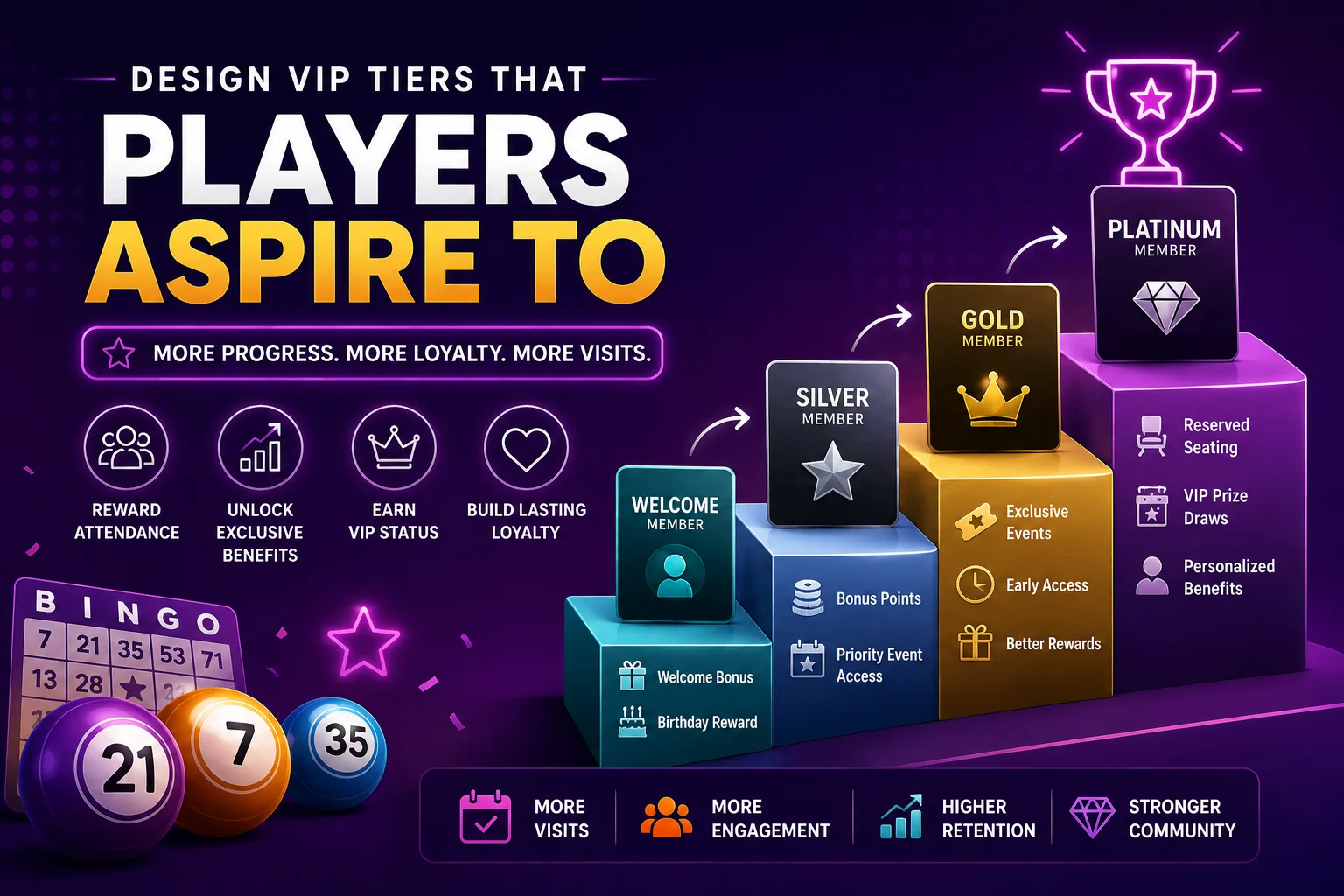
Welcome Member
Every new player starts here.
Benefits might include:
- Digital membership
- Birthday reward
- First visit bonus
- Access to promotions
The goal is making registration feel worthwhile from day one.
Silver Member
After several visits, members unlock additional recognition.
Possible rewards include:
- Bonus loyalty points
- Priority registration for selected events
- Exclusive promotional offers
At this stage, players begin seeing tangible benefits from returning regularly.
Gold Member
Gold status should feel noticeably different.
Benefits could include:
- Invitations to VIP bingo nights
- Complimentary refreshments
- Early access to high-demand events
- Enhanced reward earning rates
The emphasis shifts from discounts to exclusive experiences.
Platinum Member
This level should represent your most engaged players.
Rather than offering larger discounts, focus on memorable privileges such as:
- Reserved seating
- Members-only prize draws
- Personalised event invitations
- Anniversary recognition
- Priority customer support
The objective is to make members feel genuinely valued.
Give Every Tier a Clear Purpose
Each level should answer a different question.
Welcome
"Why should I join?"
Silver
"Why should I return?"
Gold
"Why should I keep progressing?"
Platinum
"Why should I stay loyal?"
When every tier has a distinct purpose, the program feels intentional instead of repetitive.
Make Progress Visible
People stay motivated when they can see how close they are to their next goal.
Rather than leaving members guessing, show:
- Current tier
- Progress towards the next level
- Visits remaining
- Loyalty points earned
- Upcoming rewards
Visible progress encourages continued participation because members can clearly see what they're working towards.
Reward Attendance as Much as Spending
Retail loyalty programs usually reward purchases.
Bingo halls benefit from rewarding participation.
Members could progress by:
- Attending weekly sessions
- Completing visit streaks
- Joining fundraising events
- Bringing guests
- Participating in seasonal campaigns
- Reaching attendance milestones
This approach recognises the behaviours that strengthen the venue over time.
Make Benefits Feel Exclusive
The best VIP rewards aren't always the most expensive.
They're often the hardest to access.
Examples include:
- Members-only jackpot evenings
- Behind-the-scenes venue tours
- Exclusive seating areas
- Invitations to preview events
- Limited-entry tournaments
- VIP appreciation nights
Exclusivity creates value because not everyone can access the same experiences.
Use Technology to Keep the Program Running
A growing VIP program quickly becomes difficult to manage manually.
Operators need to know:
- Who qualifies for each tier
- Which benefits have been redeemed
- Which members are becoming inactive
- How frequently players visit
- Which rewards generate the strongest engagement
An integrated platform automates these processes, ensuring members receive the correct benefits without increasing staff workload.
Bingo Hall Example: From Basic Loyalty to VIP Community
Imagine two venues.
Venue One
Every member earns identical rewards.
After joining, there is little difference between a first-time visitor and someone who has attended for three years.
Participation gradually declines because there is nothing new to achieve.
Venue Two
The venue introduces a four-tier VIP programme.
Players earn status by attending sessions, maintaining visit streaks, participating in charity nights, and referring friends.
Silver members receive bonus points.
Gold members gain access to exclusive bingo evenings.
Platinum members enjoy reserved seating, special events, and personalised recognition.
Instead of chasing discounts, members begin working towards experiences they cannot receive anywhere else.
The result is a stronger sense of belonging and more consistent attendance.
Mistakes That Can Undermine a VIP Program
Making Every Tier Feel the Same
If rewards barely change from one level to the next, progression loses its appeal.
Every tier should introduce meaningful new benefits.
Forgetting Long-Term Members
Players who have supported your venue for years deserve ongoing recognition.
Anniversary rewards and loyalty milestones help reinforce those relationships.
Making Qualification Rules Difficult to Understand
Members should immediately know:
- How status is earned
- What each tier includes
- What they need to do next
Clarity encourages participation.
Treating VIP Status as a Discount Programme
Exclusive experiences often create stronger emotional loyalty than larger financial rewards.
Recognition can be just as valuable as savings.
How JustKonnect Helps Build VIP Programs That Inspire Loyalty
A successful VIP programme relies on accurate tracking, timely communication, and rewards that feel personal—not manual spreadsheets and disconnected systems.
JustKonnect VIP Tiers allows operators to create customised membership levels based on attendance, loyalty points, visit frequency, referrals, or other engagement rules. Because the platform integrates VIP tiers with CRM, SMS marketing, loyalty points, gamification, analytics, and automated campaigns, operators can deliver a seamless member experience while reducing administrative work. Members progress automatically through tiers, receive personalised communications, and enjoy benefits that reflect their ongoing relationship with the venue.
Frequently Asked Questions
How many VIP tiers should a bingo hall have?
Most venues benefit from three to five clearly defined tiers. Too many levels can make progression confusing and reduce motivation.
Should VIP status be based on attendance or spending?
Attendance-based progression often works better for bingo halls because regular visits contribute more to long-term player engagement than occasional high spending.
What rewards make players want to reach higher tiers?
Exclusive experiences such as members-only events, reserved seating, priority access, personalised recognition, bonus points, and VIP prize draws tend to be more motivating than discounts alone.
How often should members move between tiers?
The timeline should feel achievable. Members should experience regular progress while still feeling that higher tiers represent meaningful accomplishments.
Can VIP tiers be managed automatically?
Yes. Modern loyalty platforms automatically monitor player activity, update tier status, deliver rewards, and provide reporting so operators don't need to manage the programme manually.
The Difference Between a Loyalty Program and a Loyalty Journey
Many venues have a loyalty program.
Far fewer create a loyalty journey.
A journey gives players something to work towards, celebrates their progress, and recognises their commitment long after they first sign up. When every visit feels like another step towards exclusive experiences, attendance becomes more consistent, and loyalty becomes part of the overall entertainment experience rather than an afterthought.
If you're ready to create a VIP programme that players genuinely aspire to join, explore JustKonnect VIP Tiers. With configurable membership levels, automated progression, integrated CRM, loyalty tracking, SMS marketing, gamification, and analytics, you can build a loyalty experience that keeps players engaged long after the final number is called.