A regular player tells a friend about your bingo hall.
Another customer brings a family member along for a Saturday session.
A long-time member mentions an upcoming charity night to someone they know.
None of these interactions appear in your marketing dashboard.
But they are marketing.
In fact, they may be some of the most valuable marketing your bingo hall receives.
The problem is that traditional word-of-mouth is almost impossible to measure. You may know that players regularly bring guests, but you probably don't know exactly how many new customers came from those conversations, which members generate the most referrals, or whether referred players become regular visitors.
That doesn't mean word-of-mouth needs to remain unstructured.
A digital referral programme can take the conversations that are already happening inside your venue and turn them into a measurable customer acquisition channel without making the experience feel like a sales campaign.
Your Players Are Already Recommending You
Think about the conversations happening around your venue.
"Are you coming Friday?"
"You should come to the charity night."
"I've been coming here for years."
"Bring your sister next time."
These comments may seem insignificant from an operator's perspective.
But they represent something valuable: customer advocacy.
A satisfied customer is voluntarily putting their reputation behind your venue.
That's difficult to manufacture through advertising.
The challenge is that informal recommendations disappear as soon as the conversation ends.
There's no record.
No attribution.
No reward.
No way to determine whether the recommendation resulted in a visit.
A referral programme changes that.
The Difference Between Word-of-Mouth and a Referral Programme
Word-of-mouth happens naturally.
A referral programme gives it a structure.
Consider the difference.
Informal Word-of-Mouth
A player tells a friend about your venue.
The friend may or may not visit.
You probably never know where they heard about you.
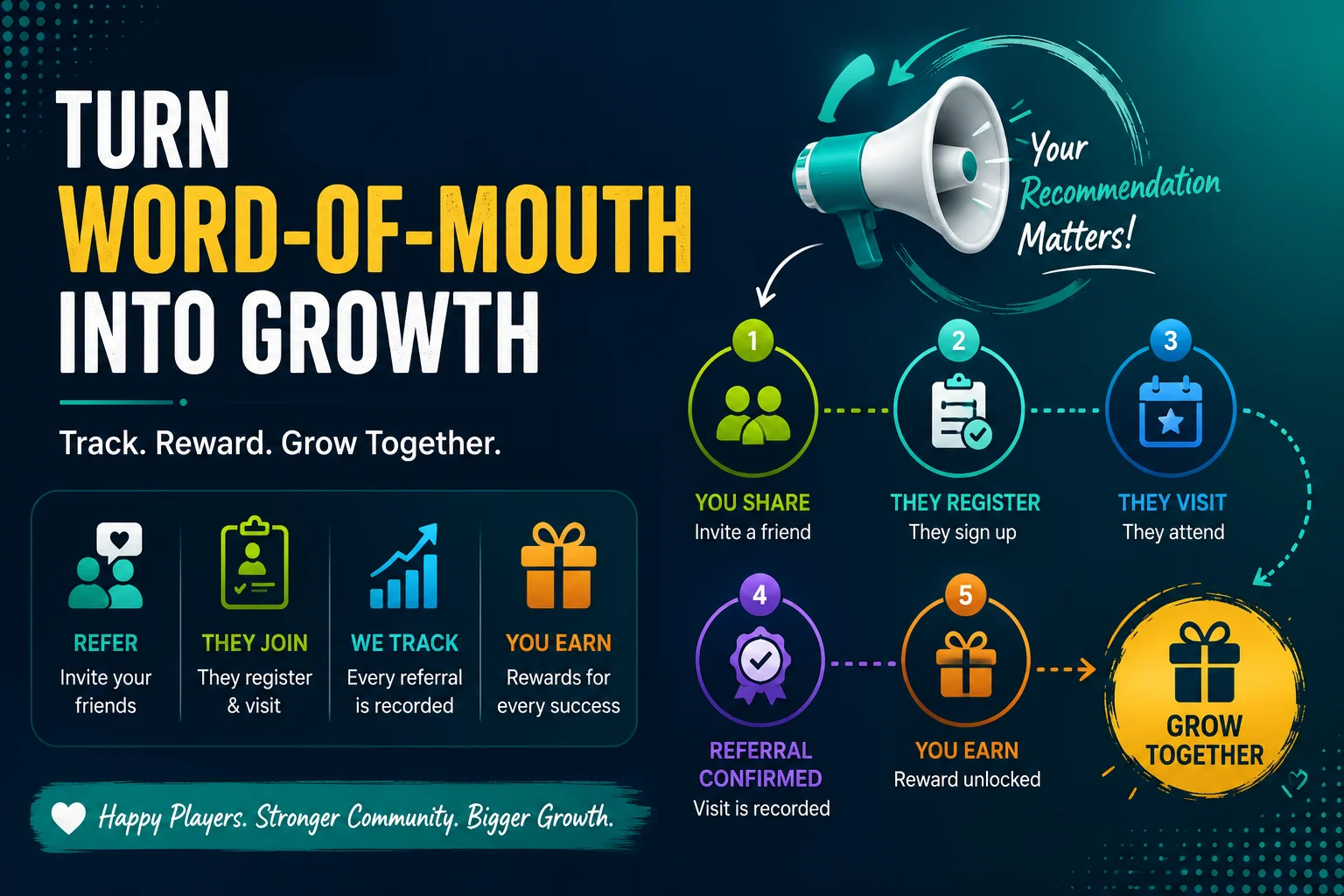
Structured Referral
A player shares a referral link or code.
The friend registers.
Their referral is recorded.
They complete a qualifying visit.
The original player receives a reward.
Now the entire journey is measurable.
The recommendation hasn't become less personal.
You've simply made the result visible.
Don't Try to Manufacture Advocacy
One mistake operators can make is treating referrals like another promotional campaign.
They send constant messages asking customers to refer friends.
That approach can make an authentic recommendation feel transactional.
The better strategy is to make referring someone easy when the moment naturally occurs.
After a great event, for example, a player might already be thinking about who they could bring next time.
A simple "Invite a Friend" option gives them a way to act on that thought immediately.
The system supports the behaviour instead of forcing it.
Start With the Customer Journey
Before introducing a referral programme, map out what you actually want to happen.
A simple journey might look like this:
Existing player
↓
Shares referral
↓
Friend registers
↓
Friend attends
↓
Referral is confirmed
↓
Reward is issued
↓
New player joins loyalty programme
↓
New player returns
The final step is important.
A referral shouldn't be judged solely by whether someone walks through the door once.
The real objective is to turn a referred visitor into a valuable long-term customer.
Give Players a Reason to Refer
Even if someone loves your bingo hall, they may not think about referring others unless the process is obvious.
A referral incentive creates a little extra motivation.
The reward could be:
- Loyalty points
- A digital voucher
- A bonus reward
- A special event benefit
- Progress toward a VIP tier
- A shared reward for both players
The exact incentive depends on your venue.
What matters is that the reward supports the behaviour you want.
If your priority is acquiring new players, reward qualified new visits.
If your priority is repeat attendance, consider making part of the reward dependent on the referred player's second visit.
Reward Successful Referrals, Not Just Names
This is one of the most important differences between a serious referral programme and a simple "refer a friend" campaign.
A customer entering someone's email address doesn't necessarily create a new customer.
The referral becomes valuable when the new player takes a meaningful action.
For example:
Referral submitted → New member registers → First qualifying visit → Reward unlocked
This structure protects the programme from low-quality referrals while ensuring rewards are connected to actual customer acquisition.
Track Who Is Driving Your Growth
Once referrals are digital, a completely different picture begins to emerge.
You may discover that one group of members generates far more referrals than everyone else.
Perhaps your most active advocates are:
- Long-term members
- VIP players
- Frequent visitors
- Event participants
- Members with high loyalty engagement
This information can influence how you communicate with those customers.
Your strongest advocates could receive exclusive referral campaigns, early access to events, or additional recognition.
They have already demonstrated that they can help bring people into the venue.
A Realistic Bingo Hall Example
Imagine a bingo hall has 1,500 registered loyalty members.
Management knows that customers regularly bring friends, but there is no formal referral system.
A new digital referral programme is introduced.
Members receive a simple option:
"Invite a Friend"
They can share a referral link.
When a new player registers and completes their first qualifying visit, the referral is recorded and the appropriate reward is issued.
After three months, the operator discovers:
- 220 members shared referrals.
- 130 referred customers completed a first visit.
- 75 returned for another session.
- A smaller group of regular advocates generated most successful referrals.
Before the programme, none of this information was available.
The operator now knows not only that word-of-mouth exists, but how much of it is producing measurable customer growth.
Referral Data Can Improve Your Other Marketing
Referral information becomes even more useful when it connects with the rest of your customer data.
Suppose referred players are significantly more likely to become regular visitors than customers acquired through a particular advertising campaign.
That tells you something.
Or perhaps referred customers respond especially well to SMS reminders during their first month.
Now you have another insight.
You can use referral data alongside:
- CRM profiles
- Loyalty points
- VIP tiers
- SMS marketing
- Punch cards
- Digital coupons
- Gamification
- Attendance analytics
This creates a much clearer view of the entire customer journey.
Turn the First Visit Into a Second Visit
Getting a referred player through the door is only the first objective.
The next challenge is retention.
A new player might enjoy the experience but forget to return.
This is where your wider loyalty strategy becomes important.
For example:
First visit: Referral reward is redeemed.
After visit: Customer receives a welcome message.
Second visit: Additional loyalty reward becomes available.
Ongoing visits: Player progresses through loyalty or VIP tiers.
The referral starts the relationship.
Your customer engagement strategy keeps it going.
Use Events to Create Natural Referral Moments
Some occasions make referrals particularly easy.
A player attending a normal session may not think about referring anyone.
But a major event creates a natural reason.
Consider:
- Charity fundraising nights
- Anniversary celebrations
- Themed bingo sessions
- Holiday events
- Jackpot nights
- Community events
- Member appreciation evenings
Instead of simply saying:
"Refer a friend."
You can make the message more relevant:
"Know someone who would enjoy our charity night? Invite them through your member account."
The referral has a purpose.
Don't Ignore the Referrer Experience
A referral programme is partly a marketing tool, but it is also a loyalty experience.
If a customer successfully refers someone and then has to wait weeks for their reward, the programme loses momentum.
Make the process clear.
Tell the member:
- Whether the referral was received
- Whether their friend completed the required action
- When the reward was issued
- What they earned
- What they can do next
Good communication reinforces the feeling that the venue recognises their contribution.
Prevent Referral Abuse Without Making the Programme Difficult
Any reward-based system needs sensible controls.
Potential safeguards include rules around:
- Self-referrals
- Duplicate accounts
- Existing members
- Reward eligibility
- Qualifying visits
- Referral limits
The goal isn't to create unnecessary barriers.
It's to make sure rewards are being issued for genuine customer acquisition.
Digital tracking makes this considerably easier than relying on paper referral cards or staff memory.
What Success Should Look Like
A referral programme shouldn't be judged by the number of people who click an invitation.
Look deeper.
Referral Conversion
How many referred people become qualified customers?
First-Visit Completion
How many actually visit the venue?
Second-Visit Rate
How many return after the first visit?
Referral Customer Value
How valuable are referred customers over time?
Advocate Performance
Which existing players generate the most successful referrals?
These measurements reveal whether word-of-mouth is creating genuine growth.
How JustKonnect Helps Systematize Word-of-Mouth
The challenge with word-of-mouth isn't generating it.
Your players are probably already doing that.
The challenge is giving those recommendations a structure that can be tracked without taking away their natural character.
JustKonnect Referral Program helps bingo halls and other physical venues turn informal recommendations into a measurable referral journey. Operators can create referral campaigns, track who referred whom, establish qualifying actions, manage rewards, and connect referral activity with customer profiles and wider loyalty engagement.
Because the referral programme can work alongside CRM, loyalty points, VIP tiers, SMS marketing, gamification, and analytics, operators can see what happens after the referral, not simply whether someone received an invitation.
Frequently Asked Questions
Is word-of-mouth really measurable?
Traditional word-of-mouth is difficult to measure because conversations happen offline. A digital referral programme creates a trackable connection between the existing customer, the referral, the new player, and the resulting visit.
How should bingo halls reward referrals?
Rewards can include loyalty points, digital vouchers, bonus rewards, VIP progression, or benefits for both the referrer and the new customer. The reward should encourage the behaviour that matters most to the venue.
Should customers be rewarded for every referral?
It's generally better to reward qualified referrals rather than simply collecting contact details. A first visit, registration, or another meaningful action can be used as the qualifying condition.
Can referral programmes help attract new players?
Yes. Existing players can introduce friends and family to the venue, while digital tracking allows operators to measure how many referred prospects become actual customers.
How can operators identify their best advocates?
By tracking referral activity, operators can identify members who consistently generate successful referrals and use that information to develop more personalised recognition or advocacy campaigns.
The Conversation Is Already Happening
You don't need to convince your players to talk about your bingo hall.
They're already doing it.
They're inviting friends, discussing events, recommending sessions, and bringing people they know through the doors.
The missed opportunity is allowing all of that activity to disappear without a trace.
A referral programme doesn't replace genuine word-of-mouth. It gives it a framework.
The recommendation remains personal. The invitation remains natural. But now the venue can see where new customers came from, recognise the players who helped bring them in, and understand what happens after the first visit.
That turns an informal conversation into something your marketing team can actually learn from.
Explore the JustKonnect Referral Program to see how you can systematize player referrals, reward successful advocacy, track new customer journeys, and turn existing player relationships into a measurable acquisition channel.