Fundraising organizations are constantly looking for new ways to increase donations, attract attendees, and create memorable events. While traditional raffles have been a staple of charity fundraising for decades, many nonprofits and charity gaming organizations are discovering that reverse raffles—also known as drawdown events—often generate significantly higher engagement and fundraising results.
The reason is simple: reverse raffles transform a standard prize drawing into an interactive event experience.
Instead of announcing a winner from hundreds or thousands of ticket holders, a reverse raffle creates suspense throughout the entire event, keeping participants engaged until the final ticket remains. The result is a fundraising event that encourages attendance, increases participation, creates additional revenue opportunities, and often raises more money than traditional raffle formats.
For organizations seeking to modernize fundraising events, digital reverse raffle platforms make managing ticket sales, drawings, player engagement, and event operations significantly easier while creating a more professional experience for attendees.
The Problem With Traditional Raffles
Traditional raffles are popular because they're simple.
Participants purchase tickets, wait for the drawing, and hope their number is selected.
However, traditional raffles often face several challenges:
- Limited attendee engagement
- Minimal interaction after ticket purchase
- Lower event attendance
- Few upselling opportunities
- Reduced excitement during the drawing
- Difficulty creating a memorable experience
Once someone buys a ticket, there is often little reason for them to stay actively involved.
In many cases, participants don't even need to attend the event to win.
As a result, organizations may sell tickets successfully while missing opportunities to generate additional donations, sponsorships, food and beverage sales, and community engagement.
What Is a Reverse Raffle?
A reverse raffle flips the traditional raffle format.
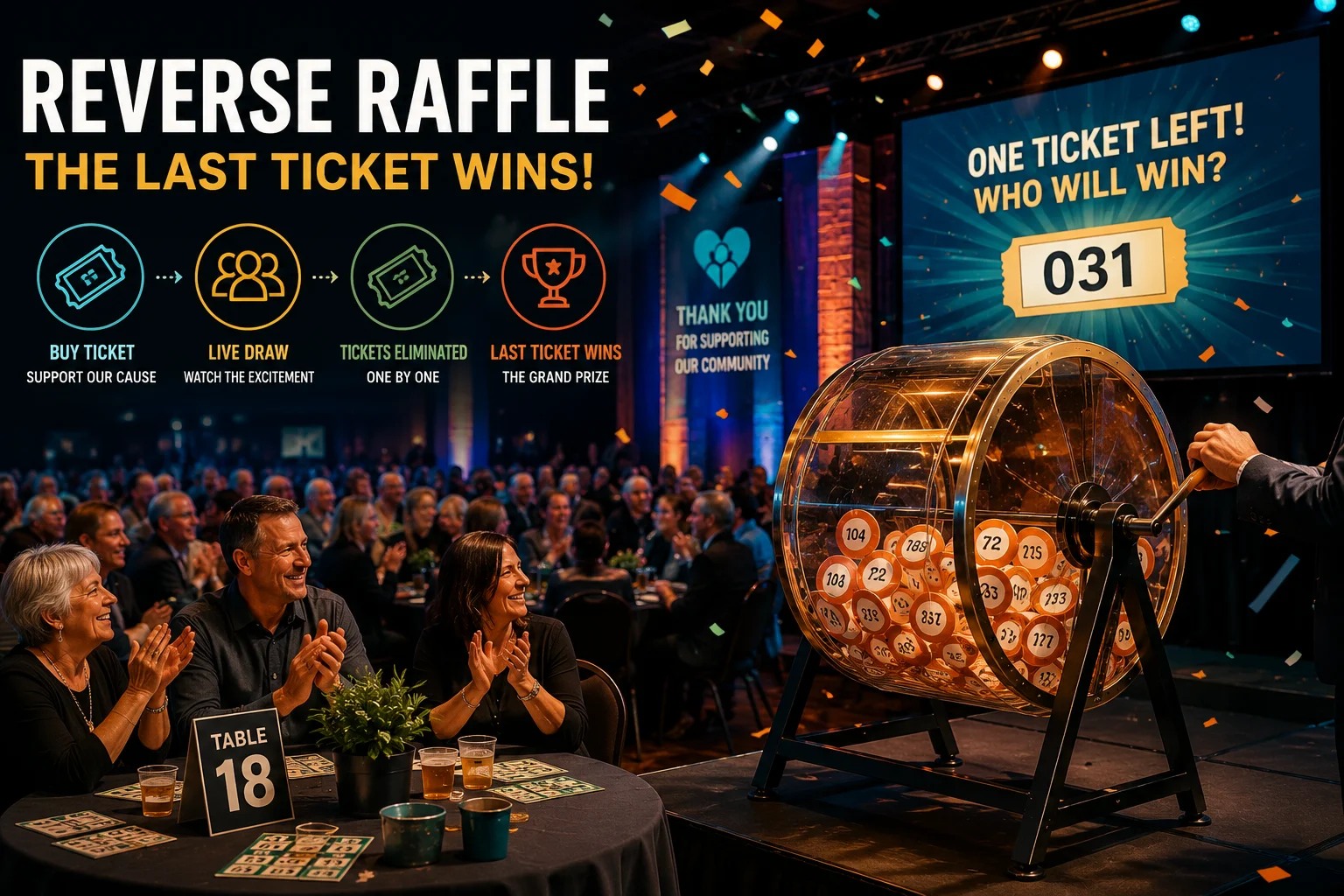
Instead of drawing tickets to identify the winner immediately, tickets are drawn and eliminated one at a time.
The final remaining ticket wins the grand prize.
Because participants watch tickets get eliminated throughout the event, anticipation builds continuously.
This creates a much more engaging experience than a standard raffle drawing.
Reverse raffles are often referred to as:
- Drawdown events
- Last-ticket-standing raffles
- Elimination raffles
- Reverse drawings
Although the format is different, the goal remains the same: raising money for a charitable cause while providing participants with an entertaining experience.
How a Reverse Raffle Works
While specific formats vary, the process typically follows a similar structure.
Step 1: Sell a Limited Number of Tickets
Most reverse raffles use a fixed number of tickets.
For example:
- 100 tickets
- 250 tickets
- 500 tickets
Limiting availability often increases perceived value and urgency.
Step 2: Host a Live Event
Participants gather at a venue or fundraising event.
Many organizations combine reverse raffles with:
- Charity bingo nights
- Fundraising dinners
- Community events
- Silent auctions
- Entertainment programs
The raffle becomes a centerpiece attraction rather than a standalone drawing.
Step 3: Draw and Eliminate Tickets
Throughout the event, ticket numbers are randomly selected.
Instead of winning immediately, selected tickets are removed from contention.
Each elimination increases suspense.
Step 4: Continue Until One Ticket Remains
The final remaining ticket becomes the grand prize winner.
This gradual elimination process creates excitement that lasts throughout the event.
Why Reverse Raffles Raise More Money
The most successful fundraising events create emotional engagement.
Reverse raffles excel because they combine fundraising with entertainment.
They Keep People Engaged Longer
Traditional raffle excitement lasts only a few moments.
Reverse raffles keep participants invested throughout the event.
Attendees remain engaged because their ticket could still be in play.
Longer engagement often translates into:
- Higher attendance
- More food and beverage sales
- Increased donations
- Additional fundraising participation
They Create Event-Based Fundraising
Many traditional raffles happen independently of an event.
Reverse raffles encourage people to attend in person.
When participants gather together, organizations gain additional opportunities for:
- Sponsorship visibility
- Merchandise sales
- Additional games
- Donation appeals
- Community engagement
They Increase Perceived Value
When only a limited number of tickets are available, participants often perceive the opportunity as more exclusive.
A raffle with 250 tickets can feel more attractive than one with thousands of entries.
Scarcity can increase ticket demand and improve fundraising performance.
They Encourage Additional Revenue Streams
Many drawdown events include:
- Side raffles
- Instant-win games
- Silent auctions
- Split-the-pot contests
- Bingo sessions
- Sponsor promotions
Because attendees stay engaged longer, organizations can generate revenue from multiple activities during a single event.
The Psychology Behind Drawdown Events
One reason reverse raffles are so effective is that they leverage anticipation.
People naturally become more invested when outcomes unfold gradually.
Each eliminated ticket creates:
- Suspense
- Emotional investment
- Social interaction
- Event participation
As the field narrows, excitement intensifies.
Participants frequently remain engaged until the final moments, even if they are no longer eligible to win.
This emotional involvement helps transform fundraising into an experience rather than simply a transaction.
How Technology Improves Reverse Raffle Events
Historically, reverse raffles required extensive manual management.
Organizers often struggled with:
- Ticket tracking
- Number verification
- Drawing logistics
- Display management
- Reporting
- Event administration
Modern fundraising technology eliminates many of these challenges.
Digital reverse raffle platforms help organizations:
- Sell tickets efficiently
- Automate drawings
- Display eliminations in real time
- Manage participant information
- Track event performance
- Simplify reporting
These tools reduce administrative workload while creating a more professional event experience.
A Real-World Example
Imagine a nonprofit organization hosting a fundraising dinner.
Traditional Raffle
- 1,000 tickets sold
- Winner announced in 30 seconds
- Limited audience engagement
- Minimal additional fundraising activity
Reverse Raffle Event
- 250 premium tickets sold
- Live drawdown throughout the evening
- Attendees remain engaged for hours
- Additional silent auction participation
- Increased sponsorship exposure
- Higher food and beverage sales
- Greater donation opportunities
Although both events raise funds, the reverse raffle creates more opportunities to generate revenue and strengthen community involvement.
Common Mistakes to Avoid
Selling Too Many Tickets
Excessive ticket quantities can reduce excitement and perceived exclusivity.
A carefully limited ticket pool often produces better engagement.
Focusing Only on the Grand Prize
The event experience matters as much as the final prize.
Create opportunities for interaction throughout the evening.
Managing Everything Manually
Manual tracking increases the risk of errors and creates unnecessary administrative work.
Automation improves efficiency and professionalism.
Failing to Promote the Event Experience
Market the entertainment value of the drawdown—not just the prize.
Participants are often motivated by the experience as much as the potential reward.
How JustKonnect Simplifies Reverse Raffle Events
Successful drawdown events require more than ticket sales. They require smooth event management, participant engagement, accurate tracking, and a professional presentation.
JustKonnect's Reverse Raffle platform helps organizations manage ticket sales, automate drawings, display real-time eliminations, track participant information, and streamline event operations through a centralized system. By reducing manual processes and enhancing the attendee experience, organizations can focus more on fundraising and less on administrative work.
Whether you're organizing a charity bingo fundraiser, nonprofit gala, community event, or drawdown dinner, the platform helps create engaging experiences that keep participants invested from the first ticket sold to the final winning draw.
Frequently Asked Questions
What is a reverse raffle?
A reverse raffle is a fundraising raffle where tickets are eliminated one at a time until only one ticket remains. The final remaining ticket wins the grand prize.
Why are reverse raffles called drawdown events?
The term "drawdown" refers to gradually reducing the pool of eligible tickets through repeated drawings until a winner remains.
Do reverse raffles raise more money than traditional raffles?
In many cases, yes. Reverse raffles create longer engagement, encourage event attendance, and generate additional fundraising opportunities beyond ticket sales.
How many tickets should a reverse raffle sell?
The ideal number depends on your audience and fundraising goals, but many organizations use limited quantities such as 100, 250, or 500 tickets to maintain exclusivity and excitement.
Can reverse raffles be managed digitally?
Yes. Modern reverse raffle platforms automate ticket tracking, drawings, displays, participant management, and reporting, making events easier to run and more engaging for attendees.
Key Takeaways
- Reverse raffles eliminate tickets until one final winner remains.
- Drawdown events create significantly more engagement than traditional raffles.
- Participants stay invested throughout the event because suspense builds over time.
- Reverse raffles often generate additional revenue through attendance, sponsorships, auctions, and related fundraising activities.
- Technology simplifies event management while creating a more professional experience for organizers and attendees.
Ready to Host a More Engaging Fundraising Event?
If you're looking for a fundraising format that keeps attendees engaged, creates excitement throughout the evening, and opens the door to additional revenue opportunities, a reverse raffle may be the perfect solution.
Explore the JustKonnect Reverse Raffle platform to see how digital drawdown event management can help your organization simplify operations, improve participant experiences, and raise more money for your cause.