A bingo hall can be busy on Friday night and frustratingly quiet on Tuesday.
That's the reality for many venue operators.
The problem isn't always a lack of loyal customers. Sometimes the issue is simply that players have no compelling reason to choose a quieter session over the nights they already prefer.
The obvious response is to discount.
Run a venue-wide promotion. Offer money off. Give everyone the same voucher. Repeat it the following week.
It may increase attendance temporarily, but there's a downside: if customers learn that discounts are always available, they may stop seeing the regular price as the normal price.
Digital coupons and vouchers offer a more controlled alternative.
Instead of discounting your entire loyalty programme, you can create specific offers designed to influence particular behaviours such as attending a quieter Tuesday session, returning after a period of inactivity, or joining a special fundraising event.
The difference is subtle but important.
You're not simply giving money away.
You're using incentives strategically to move attendance where your venue needs it most.
The Problem With Giving Everyone the Same Offer
Imagine your bingo hall already has a strong Friday night audience.
You send every customer a 20% discount for Friday.
What happens?
Your regular Friday players use the offer.
But you haven't necessarily changed their behaviour.
They were already planning to attend.
Meanwhile, Tuesday remains quiet.
The promotion has reduced revenue from customers who didn't need convincing while doing little to solve the actual attendance problem.
This is where targeted coupons become much more useful.
Instead of asking:
"How can we give customers a discount?"
Ask:
"Which customer behaviour are we trying to change?"
That question leads to much smarter promotions.
Use Coupons to Fill Specific Sessions
Suppose Tuesday attendance is consistently below your target.
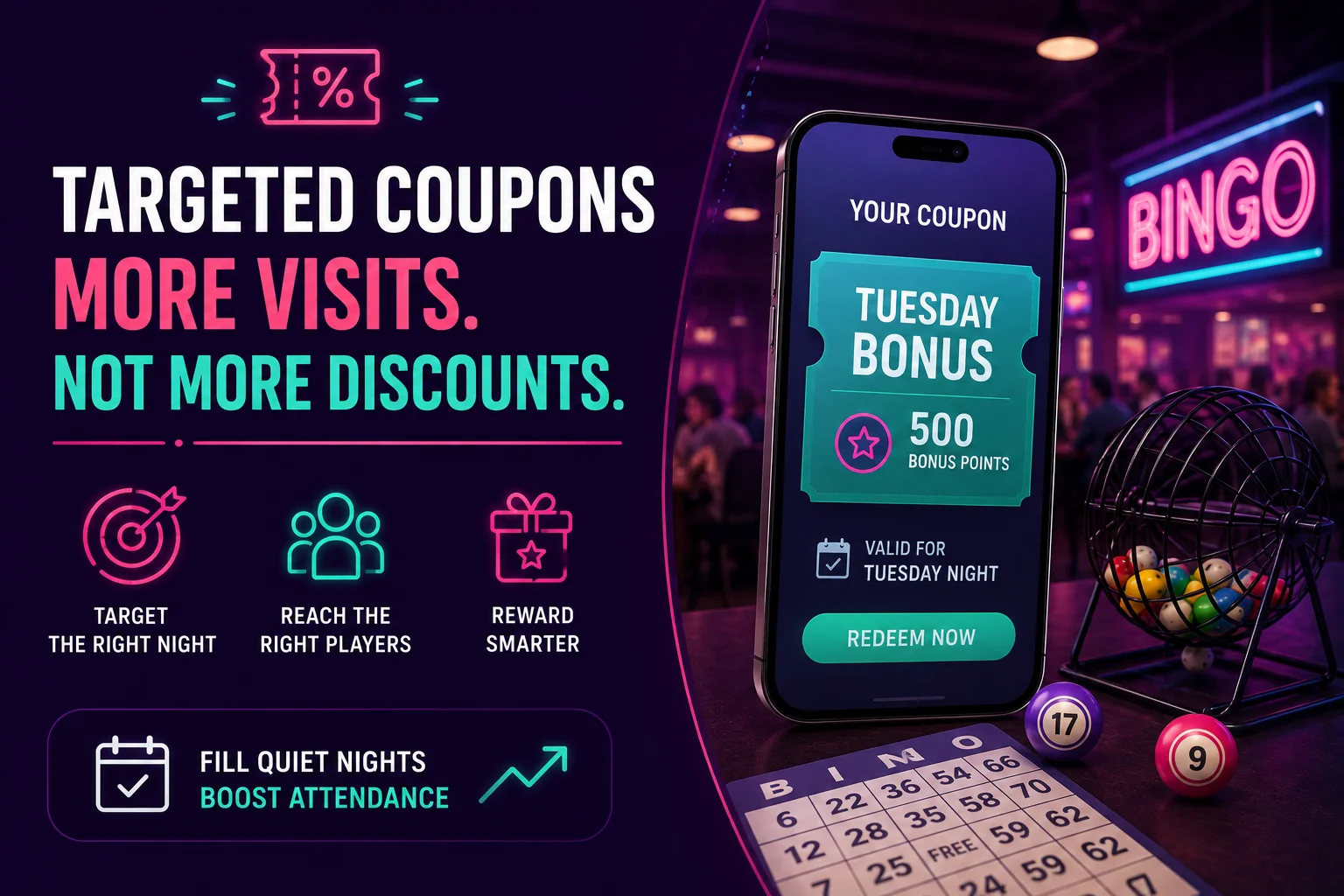
Rather than launching a programme-wide discount, create a voucher specifically for Tuesday.
For example:
Tuesday Bonus Voucher
Attend this Tuesday session and receive a bonus loyalty reward.
Or:
Midweek Bingo Offer
Show this digital voucher at Tuesday's session to unlock an exclusive reward.
The offer has a defined purpose.
It targets a particular night without changing the perceived value of your entire programme.
Segment the Audience Before Sending the Offer
Not every customer needs the same incentive.
Your database may include:
- Weekly regulars
- Weekend-only players
- New members
- Inactive customers
- VIP members
- Occasional visitors
- Players who attend specific events
Sending the same coupon to everyone wastes the opportunity to personalise the campaign.
Instead, consider who is most likely to respond.
Weekend Regulars
These players already visit regularly but may not attend midweek.
A Tuesday voucher could encourage them to add an extra visit.
Inactive Players
Someone who hasn't attended for six weeks may respond better to a stronger reactivation incentive.
New Members
A new member could receive a voucher encouraging their second or third visit.
VIP Players
Rather than offering a basic discount, give VIP members an exclusive experience or bonus reward that reinforces their status.
The objective isn't to send more coupons.
It's to send more relevant coupons.
Give the Voucher a Specific Job
A good coupon campaign should have one clear objective.
For example:
Objective: Increase Tuesday attendance.
Audience: Players who normally attend on Friday or Saturday.
Offer: Bonus loyalty points for Tuesday attendance.
Duration: Four consecutive Tuesdays.
Measurement: Compare Tuesday attendance before and during the campaign.
This makes it possible to determine whether the offer actually changed behaviour.
Without a defined objective, promotions can quickly become little more than routine discounting.
Reward the Visit Instead of Discounting the Price
A coupon doesn't always need to reduce the cost of a player's visit.
This is an important distinction.
Instead of:
"Get £5 off your session."
You could offer:
"Attend Tuesday and receive 500 bonus loyalty points."
Or:
"Visit this Wednesday and unlock a Spin-to-Win opportunity."
Or:
"Attend two midweek sessions this month and receive a special reward."
These offers can create a reason to visit without immediately reducing the value of the core product or experience.
Create Time-Limited Offers
Urgency can make a targeted promotion more effective.
A voucher that can be used anytime may be forgotten.
A voucher that expires on Wednesday gives the customer a clear reason to act.
Examples include:
- Tuesday-only rewards
- Weekend event vouchers
- 48-hour comeback offers
- Monthly attendance challenges
- Birthday-week vouchers
- Limited fundraising event offers
The shorter the window, the clearer the intended behaviour should be.
Use Digital Vouchers to Reactivate Inactive Players
One of the most valuable uses of digital coupons is bringing back customers who have stopped attending.
Consider a player who used to visit every week but hasn't been seen for two months.
Instead of sending them the same newsletter as everyone else, trigger a personalised message:
"We haven't seen you for a while. Visit us this Tuesday and enjoy a special member reward."
The campaign is based on behaviour rather than guesswork.
If the player returns, the system can record that response and help determine whether the campaign was successful.
Build Campaigns Around Special Events
Digital vouchers can also help build attendance around events that need extra promotion.
For example:
- Charity fundraising nights
- Jackpot events
- Holiday sessions
- Anniversary celebrations
- Themed bingo nights
- Community events
Rather than advertising the event broadly, operators can provide specific incentives to selected customer groups.
A regular attendee might receive an early-access invitation.
An inactive player could receive a comeback voucher.
A VIP member could receive an exclusive event benefit.
The same event can therefore support several different customer journeys.
Avoid Training Customers to Wait for Discounts
This is one of the biggest risks of poorly managed promotions.
If customers receive discounts constantly, they may begin delaying purchases or visits until the next offer arrives.
Digital coupons should therefore be used selectively.
The goal is to influence behaviour not permanently reduce prices.
Consider alternating between:
- Bonus loyalty points
- Exclusive experiences
- Free add-ons
- VIP access
- Prize opportunities
- Event invitations
- Limited-time vouchers
This keeps the programme interesting without making discounts the central reason to participate.
Test Different Offers
Two promotions that look similar can produce very different results.
For example:
Offer A: £5 off Tuesday attendance.
Offer B: Double loyalty points on Tuesday.
Offer C: Attend Tuesday and receive a Spin-to-Win opportunity.
The best option isn't necessarily the one that provides the biggest financial incentive.
Track which promotion produces:
- More visits
- More repeat attendance
- Higher redemption rates
- Better engagement
- Stronger retention
Over time, campaign data can show which incentives actually change behaviour.
A Practical Bingo Hall Example
Imagine a venue where Friday and Saturday sessions are consistently busy, while Wednesday attendance is 25% lower than the weekly average.
Instead of introducing a venue-wide discount, the operator creates a four-week Wednesday campaign.
Players who normally attend Friday or Saturday receive a digital voucher offering double loyalty points when they attend Wednesday.
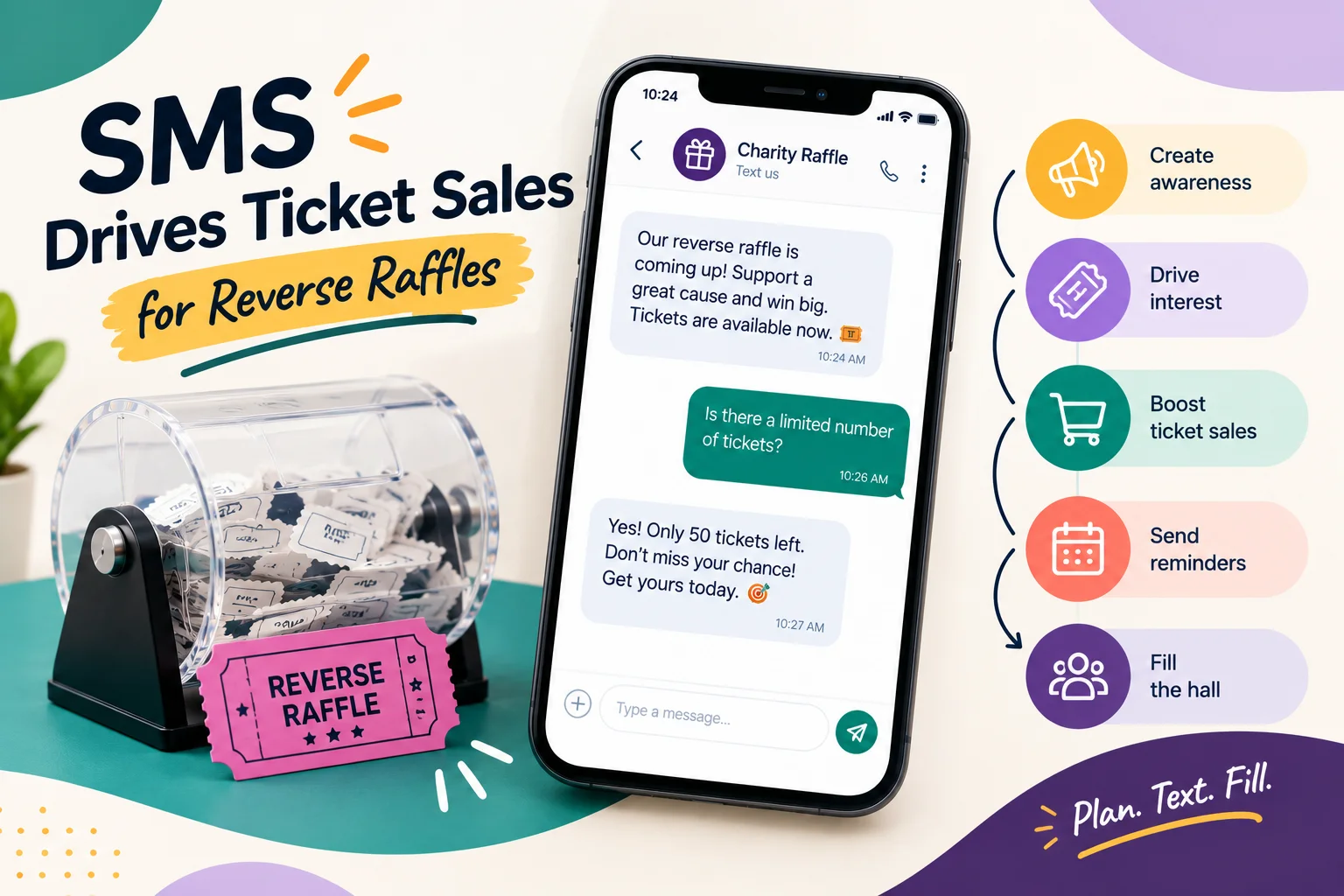
The campaign is promoted through SMS.
After four weeks, the operator compares Wednesday attendance with the previous four-week period.
If attendance increased significantly, the campaign demonstrated that the incentive changed behaviour.
If there was little change, the operator can test a different reward.
The important point is that the venue didn't discount every session.
It used a targeted incentive to address a specific operational problem.
What Digital Technology Adds to the Process
Paper coupons can encourage visits, but they provide limited visibility.
Digital coupons can be connected to customer profiles and loyalty activity.
Operators can see:
- Who received an offer
- Who opened or engaged with a campaign
- Who redeemed the voucher
- Which sessions generated redemptions
- Which customers returned afterwards
This creates a feedback loop:
Identify → Target → Incentivise → Track → Improve
That is far more powerful than distributing thousands of generic coupons and hoping attendance improves.
How JustKonnect Supports Targeted Coupon Campaigns
Digital coupons become considerably more useful when they're connected to the rest of your customer engagement strategy.
JustKonnect Coupons & Vouchers allows operators to create and distribute digital offers while connecting promotions with customer profiles, loyalty programmes, SMS marketing, and venue engagement. Instead of relying on blanket discounts, operators can create targeted incentives designed around specific visits, events, customer segments, and promotional objectives.
For a bingo hall, that could mean encouraging a weekend player to attend midweek, bringing an inactive member back, rewarding VIP customers, or increasing participation in a specific fundraising event.
The result is a more controlled approach to promotions where operators can measure what happened after an offer was sent rather than simply counting how many coupons were distributed.
Frequently Asked Questions
Can digital coupons increase bingo hall attendance?
Yes. When coupons are targeted at specific customer groups and tied to particular sessions, they can provide an additional reason for players to attend nights they might otherwise skip.
Do coupons always need to offer a discount?
No. Operators can use bonus loyalty points, exclusive rewards, gamification opportunities, event access, or other incentives instead of reducing the price.
How can bingo halls avoid over-discounting?
Use coupons selectively for specific sessions, customer segments, or campaigns rather than applying discounts across the entire loyalty programme.
Can digital vouchers target inactive customers?
Yes. Customer activity data can be used to identify inactive members and deliver targeted reactivation offers designed to encourage them to return.
How should operators measure coupon performance?
Track redemption rates alongside changes in attendance, repeat visits, customer engagement, and revenue. The most useful question is whether the campaign changed behaviour not simply how many vouchers were redeemed.
Turn Discounts Into a Deliberate Attendance Strategy
A coupon is only as valuable as the behaviour it creates.
If a promotion simply gives an existing Friday-night customer a cheaper Friday visit, it may reduce revenue without solving an attendance problem.
But if that same incentive encourages a normally inactive player to return, moves a weekend visitor into a quieter midweek session, or increases participation in an important fundraising event, it becomes a strategic marketing tool.
That's the real advantage of going digital.
You can control who receives the offer, define when it can be used, connect it to loyalty activity, and measure what happens afterwards.
Explore JustKonnect Coupons & Vouchers to see how targeted digital promotions can help your bingo hall encourage specific visits, re-engage inactive players, support special events, and build smarter campaigns without turning your entire loyalty programme into a discount scheme.