A bingo hall does not need to lose a player completely to lose an opportunity.
Sometimes it only takes one unanswered phone call.
A player calls before the evening session.
Nobody answers.
They hang up.
There is no follow-up.
The player may call again. They may search online. They may ask someone else. Or they may simply decide not to come in.
The frustrating part is that the hall may never know what that missed call was worth.
Now multiply that by several missed calls every day.
A hall receiving 15 unanswered player calls a day has already created roughly 450 missed inquiries in a 30-day month.
At 20 missed calls a day, that becomes 600.
The number gets surprisingly large without the hall doing anything unusual.
This is where missed-call texting changes the equation.
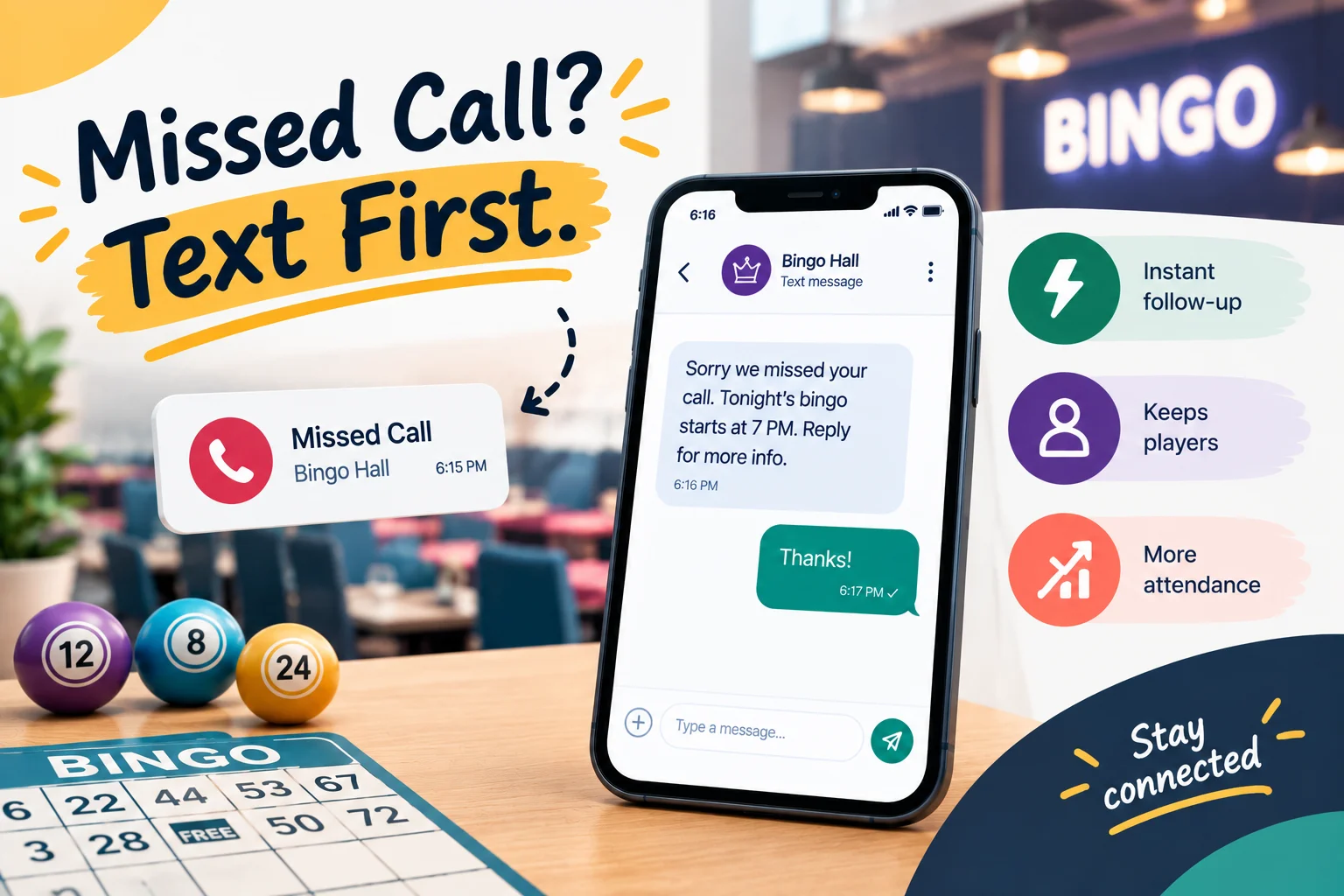
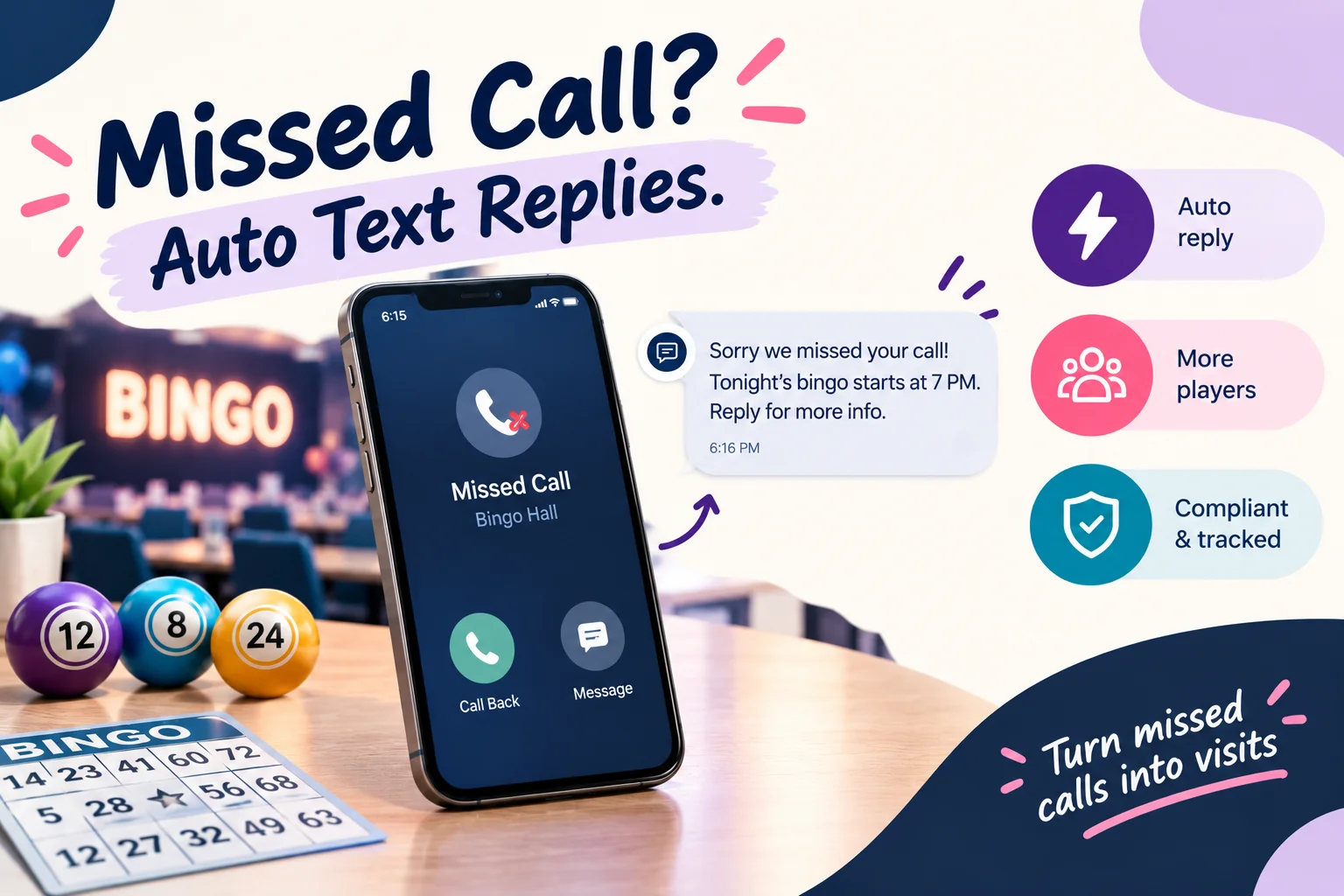
JustKonnect automatically sends a customizable SMS when an eligible player calls the hall and nobody answers. The platform also logs the missed call and the automated reply.
The objective is not to claim that every missed call becomes a visit.
It is much simpler:
Give the player a way to continue the conversation instead of allowing an unanswered call to become a dead end.
Start With the Calls Your Hall Is Already Missing
Before discussing automation, consider what is already happening.
A typical busy evening might look something like this:
5:30 PM
Players begin arriving.
5:45 PM
The phone starts ringing more frequently.
6:00 PM
Staff are checking players in and handling questions.
6:10 PM
A player calls.
Nobody answers.
6:15 PM
Another call comes in.
Staff are still occupied.
6:25 PM
A third player calls.
The hall is now preparing for the session.
None of those calls necessarily appear on the team's marketing dashboard.
They are simply missed calls.
But each caller had enough interest to initiate contact.
That is what makes the interaction different from a cold marketing contact.
The Mathematics Behind “Hundreds”
The word hundreds can sound dramatic until the numbers are laid out.
Imagine a hall averages:
10 missed player calls per day
Over 30 days:
10 × 30 = 300 missed inquiries
At:
15 per day = 450
At:
20 per day = 600
At:
25 per day = 750
The exact number will vary by hall.
The point is that missed-call volume can accumulate quickly.
And there is another important distinction.
A hall does not need to convert all 600 inquiries into visits for missed-call texting to have operational value.
Suppose a hall has 600 missed calls in a month.
If only a portion of those callers respond to the follow-up, the system has still recovered conversations that otherwise might have disappeared.
The operator can then measure what happens next.
That is much more useful than guessing how many players were “lost.”
The Old Process Has a Hidden Step
Most halls already have a basic process for missed calls.
It just may not be written down.
Usually it looks something like:
Player calls
↓
Nobody answers
↓
Call appears as missed
↓
Staff notices it
↓
Staff decides whether to call back
↓
Staff finds time
↓
Player may or may not answer
That process contains several points where the conversation can disappear.
What if the staff member is busy?
What if they see the missed call two hours later?
What if there are ten missed calls?
What if nobody knows which calls matter most?
What if the player does not answer the callback?
The problem is not that staff do not care.
The problem is that manual follow-up competes with everything else happening inside the hall.
The New Process Takes One Decision Out of Staff's Hands
With missed-call texting, the first response does not depend on someone remembering to act.
The workflow becomes:
Player calls
↓
Call is unanswered
↓
System identifies the missed call
↓
Automated SMS is sent
↓
Player receives a response
↓
Player can continue the conversation
JustKonnect describes this as an automated text-back process and allows the reply to be configured around information such as event times, jackpot information, promotions, or a callback message.
That removes one of the biggest weaknesses of manual follow-up:
the delay between the missed call and the response.
What the Player Actually Receives
The technology is relatively simple.
The message is where the operator can make it useful.
Consider a player who calls because they want to know when tonight's game starts.
A basic response might say:
“Sorry we missed your call. Tonight's bingo starts at 7 PM. Reply to this message if you need help.”
For an upcoming event:
“Sorry we missed your call. Our charity night is this Saturday at 7 PM. Reply to this message if you'd like more information.”
For a general callback:
“Sorry we missed your call. Reply to this message and our team will be happy to help.”
The message does not need to sell something.
Its first purpose is to keep the conversation alive.
The Difference Between a Missed Call and a Recovered Inquiry
This distinction is important.
A missed call is an event.
A recovered inquiry is an interaction that continues after that event.
Those are not the same metric.
For example:
| Stage | Example Monthly Volume |
| Incoming player calls | 1,000 |
| Unanswered calls | 500 |
| Automated SMS responses | 500 |
| Player replies | 120 |
| Follow-up conversations | 95 |
| Recorded visits after inquiry | 60 |
These figures are illustrative, not a JustKonnect case study.
The value of the table is that it shows operators what they can measure.
Instead of saying:
“Missed-call texting recovered hundreds of players.”
the hall can eventually say:
“We had 500 missed calls, automatically responded to 500 eligible callers, received 120 replies, and recorded 60 subsequent visits.”
That is a much more useful operational picture.
Not Every Missed Call Needs the Same Follow-Up
One reason missed-call texting becomes more valuable when connected to a player CRM is that the caller may already be known to the hall.
JustKonnect's player CRM is built around attendance, engagement history, contact information, and loyalty status. It can segment players based on factors such as visit frequency, last visit, and engagement.
That gives operators more context.
Consider two callers.
Caller A: Regular Player
They have attended multiple sessions recently.
Their missed call happens shortly before tonight's game.
A simple session reminder may be useful.
Caller B: Less-Active Player
They have not visited for several weeks.
Their missed call could represent a renewed attempt to engage with the hall.
The immediate missed-call response can remain simple, while the broader player record provides context for future communication.
The missed call does not have to exist in isolation.
The Best Time to Recover a Player Inquiry Is Usually Close to the Inquiry
Imagine someone calling at 6:20 PM.
A callback at 10 PM is technically a follow-up.
But the player may have already made their decision.
An automated SMS shortly after the unanswered call reaches them while the original reason for calling is still relevant.
That is one of the central advantages of automation.
The hall does not have to predict which missed call is important enough to answer immediately.
Every eligible missed call gets the first response automatically.
Staff can then handle conversations that actually require human attention.
This Can Be Especially Useful During Busy Sessions
The same period when player calls become more important can also be the period when staff have the least time to answer them.
That creates a predictable operational problem.
Before the session
Players call about:
- Start times
- Special events
- Jackpot information
- Promotions
- Availability
- Fundraisers
During the session
Staff is occupied with:
- Player check-ins
- Counter questions
- Game operations
- Payout activity
- Player support
The phone does not care that the team is busy.
It keeps ringing.
Missed-call texting gives the phone system a way to respond without pulling a staff member away from the floor.
One Feature Can Cover Several Common Call Types
A hall does not necessarily need a separate system for every type of inquiry.
A missed-call response can support several common situations.
Game Schedule Questions
“Sorry we missed your call. Tonight's session begins at 7 PM.”
Jackpot Questions
“Sorry we missed you. Tonight's jackpot is scheduled for the 7 PM session. Reply if you need more information.”
Event Questions
“Thanks for calling. Our next special event is Saturday at 7 PM. Reply to this message if you have a question.”
General Assistance
“Sorry we missed your call. Reply to this text and our team will get back to you.”
The exact wording should match the hall's communication process and applicable messaging requirements.
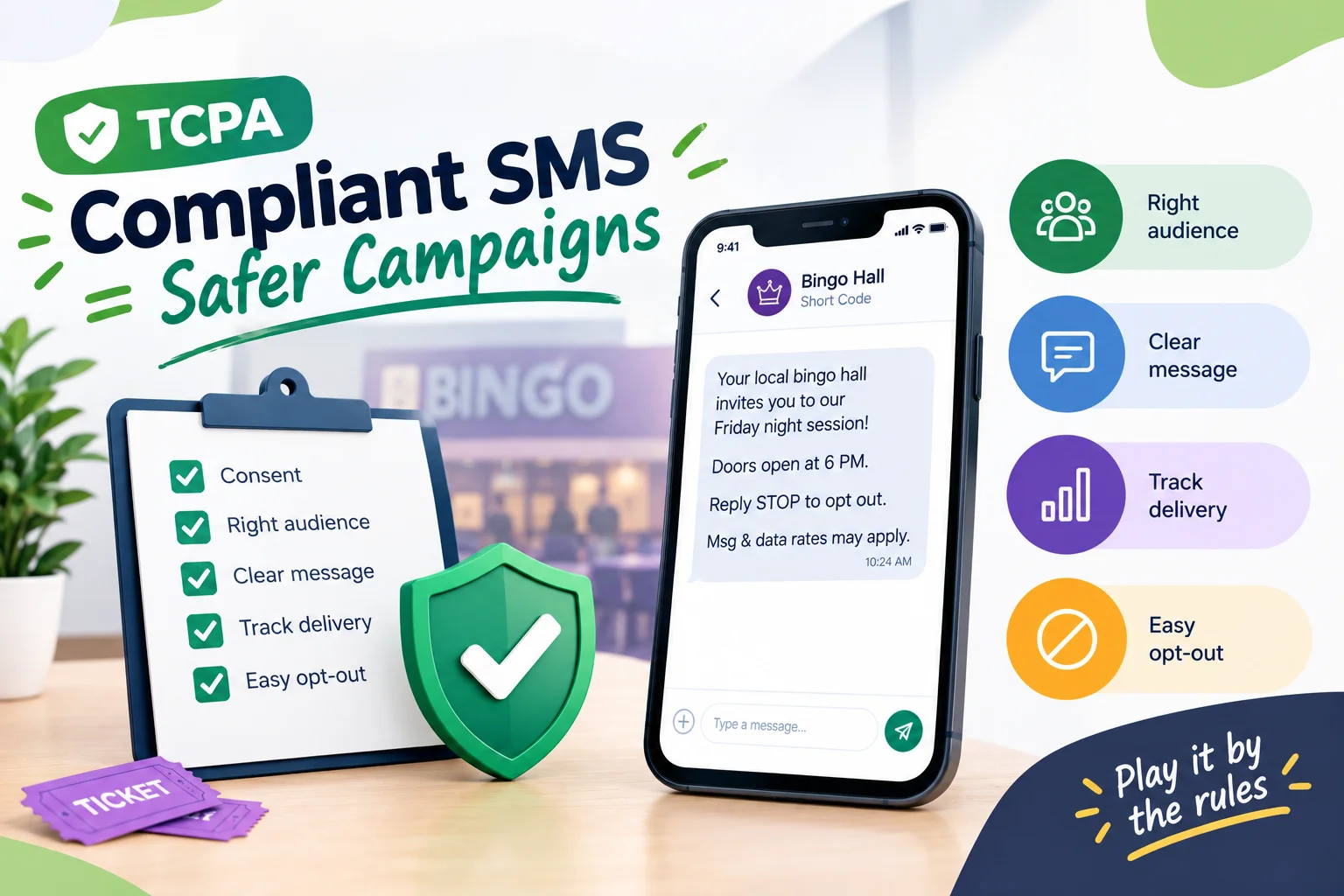
JustKonnect states that missed-call auto-replies are only activated for players who have previously opted in to SMS communications from the hall.
That is important because automated follow-up should not mean indiscriminate texting.
The Real Recovery Happens When the Player Replies
Sending the first text is only half of the process.
The bigger opportunity comes when the player responds.
For example:
Hall:
“Sorry we missed your call. Tonight's bingo starts at 7 PM. Reply if you need help.”
Player:
“Is the jackpot still £2,000?”
Now there is a real conversation.
Instead of asking the player to start again by calling the hall, the communication can continue through the messaging workflow where supported.
JustKonnect's broader platform includes two-way texting and player communication history, while its CRM can associate engagement information with player records.
That can give staff useful context when they take over.
Why “Call Us Back” Is Not Always Enough
A common missed-call response is:
“Sorry we missed your call. Please call us back.”
It is functional.
But it puts the entire burden back on the player.
They already called.
They did not get an answer.
Now they have to make another call.
A stronger approach is to give them another route:
“Sorry we missed your call. Reply to this message and our team will help.”
The player can then continue the interaction without repeating the original attempt.
That small change can reduce friction.
Missed-Call Texting Can Also Reveal What Players Want to Know
There is another benefit that becomes visible over time.
Repeated questions reveal information gaps.
Suppose players repeatedly reply:
“What time does Saturday start?”
That might indicate the event promotion needs a clearer schedule.
If they repeatedly ask:
“Do I need to register?”
the event information may not explain the registration process clearly enough.
If they frequently ask:
“Is the jackpot still available?”
the hall may need to communicate jackpot information more prominently.
The missed-call system therefore becomes more than a recovery mechanism.
It can become a source of player questions and communication insights.
What Should a Hall Measure?
Do not measure success simply by counting automated texts.
That tells you activity.
It does not tell you whether the process is useful.
A better dashboard might include:
1. Missed Calls
How many eligible player calls went unanswered?
2. Response Coverage
How many of those calls triggered an automated response?
3. Reply Rate
How many players responded to the text?
4. Follow-Up Conversations
How many responses required staff involvement?
5. Attendance After Inquiry
Where tracking is available, how many callers subsequently attended a session?
6. Inquiry-to-Visit Rate
What percentage of identified missed-call inquiries were followed by a recorded visit?
7. Peak Missed-Call Periods
When is the hall missing the most calls?
These metrics turn a vague problem into something an operator can investigate.
JustKonnect's platform connects missed-call communication with player profiles, campaign activity, attendance-focused CRM data, and reporting.
A Simple Monthly Recovery Model
Here is a practical way for an operator to calculate the scale of the opportunity.
Start with:
Total unanswered player calls
Then calculate:
Eligible missed calls × SMS response rate = player replies
Then:
Player replies × inquiry-to-visit rate = visits associated with recovered inquiries
For example, using purely illustrative numbers:
600 missed calls
× 20% reply rate
= 120 replies
If 30% of those replies are followed by a recorded visit:
120 × 30% = 36 visits
Again, these are not claimed JustKonnect results.
They demonstrate how a hall can move from a simple feature metric—missed calls—to a more meaningful business metric: what happened after the missed call?
The Feature Is Small. The Workflow Is Not.
Missed-call texting may sound like a small feature.
A player calls.
The system sends a text.
Done.
But the operational chain behind that interaction can connect several parts of a bingo hall:
Phone communication
↓
Player identification
↓
SMS follow-up
↓
Two-way conversation
↓
CRM history
↓
Attendance
↓
That is why the feature can be more valuable inside a bingo-specific platform than as an isolated phone automation tool.
JustKonnect positions missed-call texting alongside CRM, SMS marketing, loyalty, gamification, and analytics so that communication activity can form part of the broader player journey.
What Happens Without a Recovery Process?
It is worth looking at the alternative.
A player calls.
Nobody answers.
The call sits in the phone log.
The player receives nothing.
The team may notice the missed call later.
If they call back, the player may not answer.
There is no structured record of whether the inquiry became a visit.
The hall moves on to the next session.
Multiply that by hundreds of calls.
The problem is no longer one missed phone call.
It becomes a recurring communication leak.
Turning the Leak Into a Measurable Process
A hall can approach the problem in three stages.
Stage One: Capture
Identify unanswered calls instead of letting them disappear into normal phone activity.
Stage Two: Respond
Send an immediate, relevant SMS to eligible players.
Stage Three: Measure
Track what happens after the message.
That third stage is what makes the process sustainable.
If missed-call volume is high on Friday evenings, the hall has learned something.
If replies are common around special events, the hall has learned something else.
If few players respond, the message may need to change.
If players respond but rarely attend, the problem may be somewhere later in the player journey.
The data gives the operator somewhere to investigate.
A Useful First Test for Operators
Rather than trying to redesign every phone process at once, start with one month.
Record:
Missed calls before automation
Automated replies sent
Player replies
Follow-up conversations
Visits associated with those conversations
Most common inquiry topics
At the end of the month, compare the numbers.
You may discover that missed calls are concentrated around particular sessions.
You may find that players mainly ask predictable questions.
You may discover that a relatively small number of missed calls generate a meaningful amount of follow-up activity.
Or you may find that the message itself needs improvement.
Either way, the hall now has evidence instead of assumptions.
Common Mistakes When Setting Up Missed-Call Recovery
Making the text too long
The player called because they wanted a quick answer. Keep the SMS focused.
Using one message for every situation
A message that works for a general callback may not be appropriate for a special-event inquiry.
Treating every caller as a marketing lead
A missed call is an interaction, not automatically a sales opportunity.
Forgetting communication permissions
Automated texting still needs to operate within the hall's applicable consent and communication rules. JustKonnect states that its missed-call SMS feature only activates for players who have opted in to SMS communications.
Measuring only the number of texts
A high number of automated responses does not automatically mean the process is working. Measure what happens afterward.
Ignoring recurring questions
If players repeatedly ask the same thing, improve the information provided before the next event instead of simply answering the same question one player at a time.
Frequently Asked Questions
How does missed-call texting work for a bingo hall?
A player calls the hall, and the call goes unanswered. For eligible opted-in players, JustKonnect automatically sends a configurable SMS response. The missed call and automated reply are also logged.
Can missed-call texting really recover hundreds of inquiries?
The number depends entirely on the hall's call volume. For example, 15 missed calls per day would equal about 450 missed calls over a 30-day month. That does not mean 450 visits will result, but it shows how quickly unanswered inquiries can accumulate.
What can the automated message say?
Operators can configure the response around relevant information such as event times, jackpot information, promotions, or a callback request.
Does every missed call trigger a text?
According to JustKonnect's published privacy policy, missed-call auto-replies are activated only for players who have previously opted in to receive SMS communications from the hall.
Can players reply to the missed-call text?
JustKonnect's broader messaging platform supports two-way texting, allowing player conversations to continue through SMS where that workflow is configured.
Can operators track missed-call activity?
Yes. JustKonnect states that every missed call and automated reply is logged, while its wider platform provides player profiles, communication history, and reporting capabilities.
The Calls Are Already Happening. The Question Is What Happens Next.
A bingo hall does not need to create hundreds of new opportunities to find hundreds of missed inquiries.
The opportunities may already be sitting in its call history.
The player called.
The hall did not answer.
That moment can either disappear or trigger a useful next step.
Missed-call texting gives the hall a way to make that second option automatic.
And the scale can be significant.
10 missed calls a day can become 300 a month.
20 can become 600.
The objective is not to pretend every caller will become a visitor.
It is to stop treating an unanswered call as the end of the interaction.
With JustKonnect's Missed-Call Texting, eligible players can receive an automatic SMS after an unanswered call, while the interaction remains connected to a bingo-focused CRM and engagement platform.
For an operator, that creates a simple but measurable question:
How many player inquiries are currently disappearing simply because nobody was available to answer the phone?