A player has attended your bingo hall 10 times.
Another has been coming for two years.
Someone else never misses the monthly charity night.
You may know these customers are loyal, but there is a difference between recognising loyalty internally and making customers feel that loyalty is part of who they are.
That is where achievement badges can become surprisingly useful.
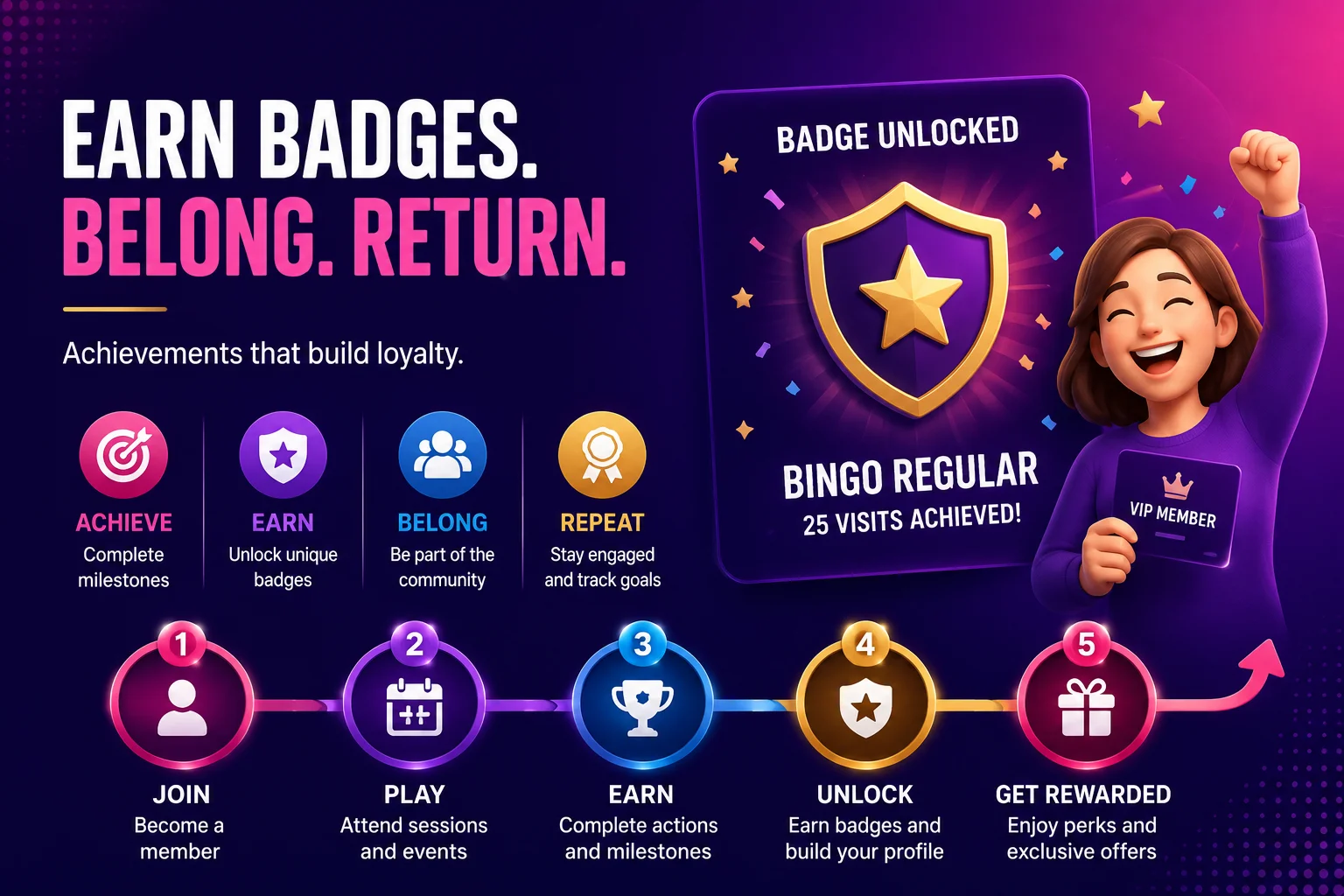
A digital badge can turn an ordinary action—such as attending a certain number of sessions, participating in an event, or reaching a loyalty milestone—into something visible and memorable.
Instead of simply telling a player, "You've visited 20 times," the venue can give that achievement a name, identity, and sense of progression.
For bingo halls, this can create another reason to return.
The player isn't only coming back for the next session.
They're working toward something.
Why Attendance Can Become More Meaningful
Most loyalty programmes focus on rewards.
Earn points.
Reach a threshold.
Redeem a benefit.
That model works, but it doesn't explain the entire reason people engage with loyalty programmes.
Players can also be motivated by:
- Progress
- Recognition
- Competition
- Collection
- Status
- Personal achievement
- Belonging
Achievement badges tap into several of these motivations at once.
A player might not need another discount, but they may enjoy seeing that they've unlocked a 10-Visit Champion badge or completed a Community Night Regular achievement.
The reward becomes part of their player identity.
What Is an Achievement Badge?
An achievement badge is a digital recognition awarded when a player completes a specific action or reaches a defined milestone.
For a bingo hall, badges could be based on:
- Number of visits
- Event participation
- Loyalty milestones
- Consecutive attendance
- Special occasions
- Community involvement
- Promotional challenges
- Game participation
For example:
First Visit
Welcome to the venue.
Five Visit Club
You've made five visits.
Bingo Regular
You've reached 25 visits.
Community Champion
You've participated in five charity events.
Weekend Warrior
You've attended 10 weekend sessions.
The badge itself may have little monetary value.
Its value comes from what it represents.
From "I Visit Here" to "This Is Part of Me"
This is the psychological shift operators should pay attention to.
A loyalty point is primarily a number.
A badge can tell a story.
Compare:
2,450 loyalty points
with:
Community Champion
The first communicates accumulated value.
The second communicates identity.
For a venue built around community and recurring attendance, that distinction can be powerful.
A player may begin thinking:
"I'm one of the regulars here."
That feeling can strengthen their connection with the venue.
Badges Create Small Reasons to Come Back
Consider a player who has already visited 19 times.
They discover that their next visit unlocks a 20-Visit Milestone badge.
They weren't necessarily planning another visit that week.
But now there is a small additional reason to attend.
The same principle can work at different stages.
Early Stage
First Visit → Five Visits
The objective is helping a new player establish a habit.
Middle Stage
10 Visits → 25 Visits → 50 Visits
The objective is encouraging continued engagement.
Advanced Stage
100 Visits → VIP Achievement → Community Champion
The objective is recognising highly engaged members.
The player always has another milestone to work toward.
Make the First Badge Easy to Earn
Achievement systems work best when players experience an early win.
Imagine joining a loyalty programme and immediately seeing:
First Visit Badge: Unlocked
That gives the player an instant sense of progress.
The next milestone might be:
Five Visits: 3/5
Now the customer can see that another achievement is within reach.
This creates a simple progression:
Start → Progress → Achievement → Next Goal
The objective isn't to make every milestone difficult.
It's to keep meaningful goals visible.
Not Every Badge Should Be About Spending
This is particularly important for bingo halls.
If every achievement is based on spending, the system starts looking like a traditional retail loyalty programme.
Attendance-based badges can be much more relevant.
For example:
- 5 visits
- 10 visits
- 25 visits
- 5 consecutive weeks
- 3 charity events
- 10 midweek sessions
- 5 special events
This encourages behaviours that matter to venue operators without making customers feel that loyalty is purely transactional.
Badges Can Help Fill Quieter Nights
One of the most practical applications is attendance balancing.
Suppose Friday and Saturday sessions are consistently busy, but Tuesday is quieter.
Instead of discounting Tuesday indefinitely, introduce an achievement:
Midweek Master
Unlock the badge after attending five Tuesday sessions.
The campaign can be supported with SMS reminders, loyalty rewards, or other engagement features.
Now the operator has created a longer-term attendance challenge rather than simply giving customers another discount.
The badge provides a destination.
Create Badges Around Different Player Behaviours
A good achievement system doesn't assume every player is motivated by the same thing.
Different badges can appeal to different behaviours.
The Regular
Rewards frequent attendance.
The Explorer
Rewards trying different sessions or events.
The Community Member
Rewards participation in fundraising and community events.
The Weekend Player
Recognises consistent weekend attendance.
The Midweek Regular
Encourages attendance during quieter periods.
The Long-Term Member
Recognises sustained loyalty over time.
This creates multiple paths through the programme.
Players can develop their own identity rather than being pushed through one standard progression.
Use Rare Achievements Carefully
Not every badge needs to be easy.
Some achievements can be deliberately harder to unlock.
For example:
100 Visits
12 Consecutive Weeks
10 Charity Events
Founding Member
These achievements can become status markers for highly engaged players.
The important thing is making the achievement genuinely meaningful.
If everyone receives the same badge immediately, it stops feeling special.
Combine Badges With Rewards
A badge doesn't necessarily need to be the reward itself.
It can be the recognition layer within a larger loyalty system.
For example:
Reach 10 visits → Unlock badge + 250 loyalty points
Or:
Complete five charity events → Unlock badge + exclusive event reward
This gives players both recognition and practical value.
The badge tells them:
"You've achieved something."
The reward tells them:
"And here's something for doing it."
Badges Can Work With VIP Tiers
Achievement badges and VIP tiers serve different purposes.
A VIP tier represents status within the programme.
A badge represents a specific accomplishment.
Together, they can create a richer loyalty experience.
For example:
Gold VIP
plus:
25-Visit Champion
plus:
Community Champion
The customer doesn't simply have a membership level.
They have a history with the venue.
That history becomes visible through their achievements.
Bring Gamification Into the Physical Venue
Gamification doesn't have to exist only on a customer's phone.
Badges can become part of the wider venue experience.
For example, a venue might highlight:
This Month's Milestones
or recognise major achievements during member events.
This can create social reinforcement without turning the bingo hall into a competitive video game.
The technology stays in the background.
The recognition happens in the real world.
A Practical Bingo Hall Example
Imagine a bingo hall introduces a simple achievement system.
Every player starts with:
Welcome Badge
The next milestones are:
5 Visits
10 Visits
25 Visits
50 Visits
The venue then introduces additional behaviour-based badges:
Midweek Master – five Tuesday visits.
Charity Champion – five fundraising event visits.
Weekend Regular – ten Saturday visits.
A player who normally attends every Friday notices they're only two visits away from the 10-Visit badge.
They decide to attend an additional session.
Later, they discover the Midweek Master challenge.
The venue has achieved something important.
It hasn't simply rewarded the visit that was already happening.
It has created reasons to make additional visits.
Use Progress to Keep Players Interested
An achievement system becomes much more powerful when players can see what they're working toward.
Instead of revealing a badge only after it has been earned, show progress.
For example:
Midweek Master
3 of 5 visits completed.
Two more Tuesday visits to unlock.
That message is much more actionable than:
"Keep visiting to earn rewards."
The customer knows exactly what remains.
Don't Create Too Many Badges
More isn't automatically better.
If a player sees 100 achievements, the programme can become confusing.
Start with a small number of meaningful milestones.
A good initial structure might include:
- Visit milestones
- Attendance consistency
- Event participation
- Community involvement
- One or two special achievements
Then monitor which badges generate the most engagement.
Additional achievements can be introduced later based on actual player behaviour.
Measure Whether Badges Change Behaviour
The badge itself isn't the business objective.
The behaviour behind it is.
Operators should look at metrics such as:
- Attendance frequency
- Repeat visits
- Badge completion
- Progress toward milestones
- Midweek attendance
- Event participation
- Loyalty engagement
- Retention after unlocking an achievement
Suppose players who unlock their first five-visit badge are significantly more likely to return within the following month.
That's useful information.
It suggests the achievement is helping establish an attendance habit.
Avoid Making Achievements Feel Like Work
Gamification should add enjoyment, not create another task for customers.
Avoid complicated rules that require players to understand a long list of conditions.
Good achievements are easy to understand:
Attend five times.
Join three events.
Reach 25 visits.
Attend five midweek sessions.
The player should know what they're working toward without needing instructions from staff.
How JustKonnect Makes Achievement-Based Loyalty Easier to Manage
Achievement badges become more effective when they are part of the wider player engagement system rather than a standalone feature.
JustKonnect Achievement Badges allows venues to recognise player milestones and engagement through digital achievements while connecting gamification with loyalty and customer activity.
For a bingo hall, this can create opportunities to reward attendance, recognise event participation, encourage specific behaviours, and give players visible progress toward meaningful milestones.
The bigger opportunity comes from combining badges with other engagement tools such as loyalty points, VIP tiers, SMS campaigns, digital coupons, and analytics.
A player could receive an SMS reminding them that they're one visit away from a new badge, unlock the achievement after attending, receive loyalty points, and continue progressing toward a higher membership tier.
The badge is therefore not the entire loyalty strategy.
It's another reason for the player to keep participating.
Frequently Asked Questions
What are achievement badges in a bingo hall?
Achievement badges are digital rewards or recognition markers given to players when they reach defined milestones, such as completing a certain number of visits or participating in specific events.
Can achievement badges increase bingo hall attendance?
They can encourage repeat behaviour by giving players visible milestones to work toward. The strongest programmes connect badges to behaviours the venue wants to encourage, such as midweek visits or event participation.
Should badges provide a monetary reward?
Not necessarily. Badges can provide recognition on their own or be combined with loyalty points, vouchers, VIP progression, or other rewards.
What types of badges work well for bingo halls?
Attendance milestones, consecutive visits, charity event participation, midweek attendance, weekend visits, and long-term membership milestones are all potential options.
How do operators know whether badges are working?
Track changes in visit frequency, repeat attendance, badge completion, event participation, and retention. The objective is to determine whether achievements are influencing customer behaviour.
Give Players Something to Work Toward
A loyalty programme can tell customers what they've earned.
A good achievement system can make them think about what they want to earn next.
That small psychological difference can change the way customers interact with a venue.
Instead of every visit being an isolated transaction, attendance becomes part of a progression.
Five visits becomes a milestone.
Ten visits becomes an identity.
A charity event becomes an achievement.
A series of midweek sessions becomes a challenge.
And over time, those small moments of recognition can help turn occasional visitors into regular members.
Explore JustKonnect Achievement Badges to see how gamified milestones can be connected with loyalty, attendance, rewards, and player engagement to give customers more reasons to return.