A bingo hall can spend more on advertising and still struggle with the same problem: getting existing customers to take action.
You may already have hundreds or thousands of people in your customer database. They may receive emails or SMS messages. They may have visited the venue before. Some may even be loyal players.
But having a database isn't the same as having an engaged audience.
The bigger opportunity is often sitting inside the customers you already have.
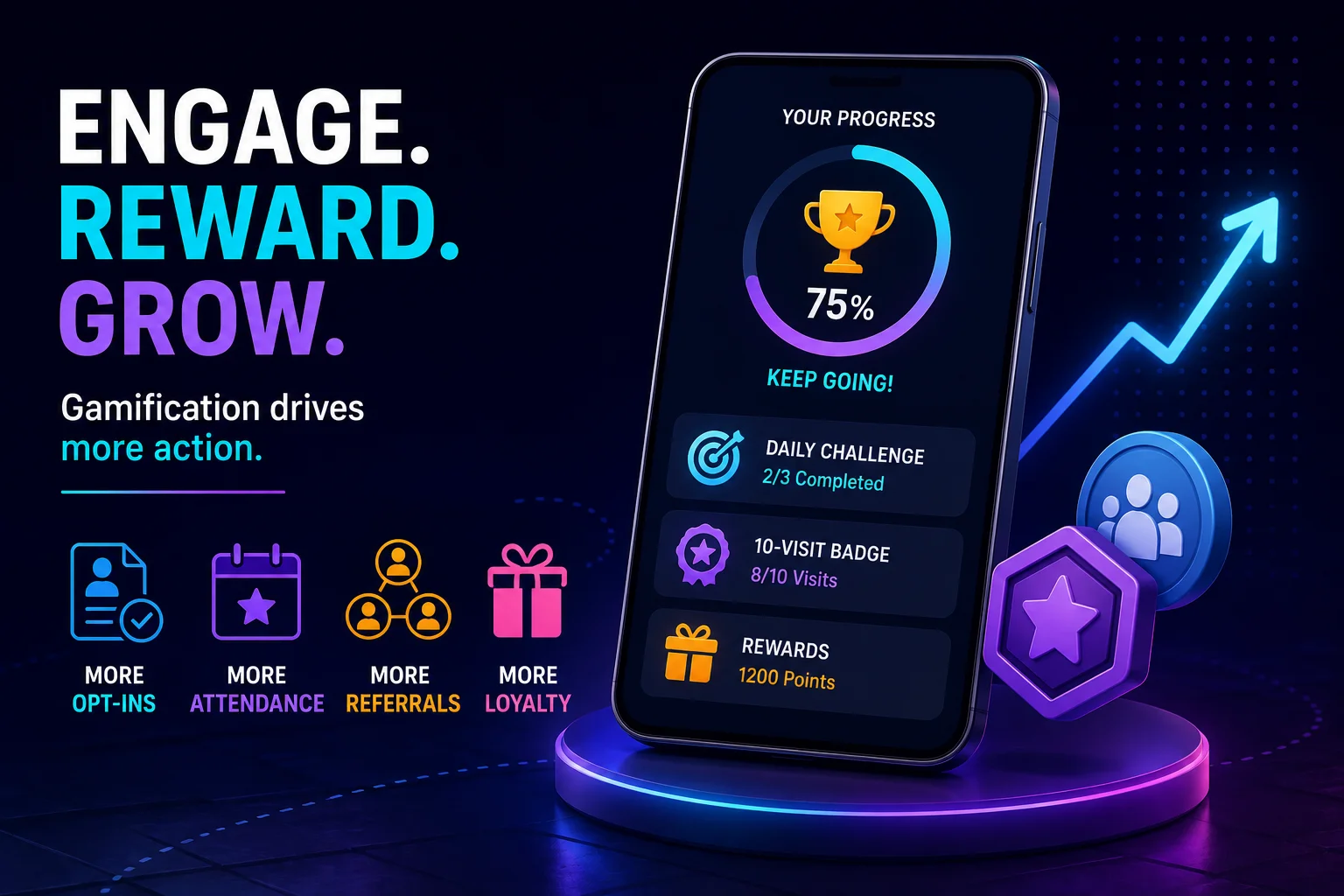
Instead of continually increasing promotional spend, operators can use gamification to make everyday actions more engaging. Joining a loyalty programme, attending a quieter session, completing a challenge, or referring a friend can become part of a progress-based experience.
The result is a different approach to marketing.
Rather than paying customers to respond to every campaign, you give them reasons to participate.
The Promotion Budget Problem
Traditional venue marketing often follows a familiar pattern.
Need more attendance?
Send a promotion.
Need more loyalty members?
Offer an incentive.
Need more referrals?
Create another reward.
Need more engagement?
Send another SMS.
Each campaign can work, but the costs can accumulate quickly.
And there's another problem.
Customers can become accustomed to incentives.
If every action requires a discount or financial reward, the customer may eventually ask:
"What am I getting this time?"
Gamification introduces another layer of motivation.
Instead of relying entirely on monetary incentives, it uses progress, achievement, recognition, curiosity, competition, and status to encourage participation.
Gamification Doesn't Replace Promotions
The goal isn't to eliminate promotions.
It's to make the promotions and loyalty activity you already run more effective.
For example, instead of sending:
"Visit us this Wednesday and receive a special offer."
You could create:
Wednesday Challenge
Attend three Wednesday sessions this month to unlock an exclusive achievement and receive a loyalty reward.
The promotion still exists.
But now the customer has a goal.
That difference can influence how they respond.
Why Gamification Can Increase Loyalty Opt-Ins
Getting someone to join a loyalty programme can be difficult when the only message is:
"Join our loyalty programme."
There isn't necessarily an immediate reason to act.
Gamification can change the proposition.
Imagine a new customer sees:
Join today and start your achievement journey.
Then they can see potential milestones:
- First Visit
- 5-Visit Regular
- 10-Visit Champion
- Event Explorer
- Community Champion
The loyalty programme becomes more than an account for collecting points.
It becomes a place where customers can track progress.
Turn Registration Into the Start of Something
The first badge could be awarded immediately after registration or the first qualifying visit.
That gives the customer an instant sense that they've started progressing.
The journey becomes:
Register → Unlock first achievement → See next milestone → Return → Progress
Instead of asking someone to join a programme for an abstract future benefit, you're giving them something concrete to explore.
Make the Next Visit Part of the Game
Getting a customer to opt in is only the beginning.
The next challenge is attendance.
A player may have every intention of returning but still not make it back.
Gamification can give them an additional reason.
For example:
You've completed 4 of 5 visits toward your next achievement.
That message is different from a generic reminder.
The customer already has progress invested.
One more visit completes the objective.
The Power of a Visible Goal
Imagine two customers.
Customer A
Receives:
"Don't miss our next bingo session."
Customer B
Receives:
"You're one visit away from unlocking your 10-Visit Champion badge."
Both messages encourage attendance.
But the second is personalised around something the customer has already started.
The venue isn't simply asking for another visit.
It's showing the player that their previous activity has created progress.
Use Gamification to Fill Specific Sessions
Operators don't always need more attendance everywhere.
Often, the problem is more specific.
Friday is busy.
Saturday is busy.
Tuesday has empty seats.
That creates an opportunity for targeted gamification.
Example: Midweek Challenge
Attend four Tuesday sessions this month.
Complete the challenge and unlock the Midweek Master badge.
The customer has a reason to visit on a day that may otherwise be less attractive.
You can then support the challenge with SMS reminders:
"You've completed 2 of 4 Tuesday visits. Two more to unlock your Midweek Master achievement."
The campaign is targeted at behaviour rather than simply giving everyone a discount.
Gamification Can Make Existing Rewards Work Harder
Suppose your venue already offers loyalty points.
You don't necessarily need to increase the value of those points.
Instead, add a progression layer.
For example:
Attend 5 sessions → 500 points + achievement badge
Attend 10 sessions → 1,000 points + higher achievement
The same loyalty reward now sits inside a larger journey.
The customer sees both:
What they've earned
and
What they can achieve next.
How Gamification Can Encourage Referrals
Referrals are another area where game mechanics can be useful.
A standard referral message might say:
"Refer a friend and receive a reward."
That's straightforward.
But a gamified approach could introduce a referral challenge.
Bring-a-Friend Challenge
Refer one new player → Unlock Friend Maker
Refer three qualified players → Unlock Community Connector
Refer five qualified players → Unlock Ambassador status
Now referrals become part of a progression system.
The customer isn't simply completing one transaction.
They're working toward a status or achievement.
Make Referral Progress Visible
A customer who has already referred two people may be more motivated by:
2 of 3 successful referrals completed
than by another generic referral reminder.
They are already close.
One more successful referral completes the challenge.
This is where gamification can potentially increase referral activity without requiring a larger reward for every individual referral.
Turn Loyal Players Into Advocates
Your most engaged customers are often your strongest potential advocates.
They already:
- Attend regularly
- Know the venue
- Participate in events
- Understand the experience
- Have relationships with other players
Gamification gives them another reason to become active participants in your growth strategy.
For example:
Community Ambassador Challenge
Invite three new players who complete a qualifying visit.
Unlock a special achievement.
The venue can recognise the behaviour while still maintaining appropriate referral rules and reward controls.
Gamification Creates Multiple Reasons to Engage
One customer might be motivated by attendance.
Another might enjoy collecting badges.
Another might want VIP status.
Someone else may enjoy referring friends.
A well-designed gamification strategy can accommodate all of these behaviours.
For example:
Attend → Earn points
Reach milestone → Unlock badge
Complete challenge → Progress toward VIP tier
Refer friend → Unlock referral achievement
Participate in event → Earn another milestone
The customer has multiple ways to engage with the venue.
You Don't Need to Make Everything Competitive
Competition can be useful, but it isn't essential.
Not every player wants a leaderboard.
Some prefer personal progress.
That's why mechanics such as these can work without direct competition:
- Achievement badges
- Progress bars
- Visit milestones
- Personal challenges
- Collections
- Streaks
- VIP progression
The customer competes against their own previous activity rather than another player.
That can make gamification more inclusive.
Keep the Cost Under Control
The biggest advantage isn't that gamification makes incentives unnecessary.
It's that it can reduce the need to make every interaction financially expensive.
Consider a simple structure:
First visit: Badge
Five visits: Badge + points
Ten visits: Badge + reward
Referral: Achievement progress
Three referrals: Special recognition
The operator doesn't have to attach a large discount to every action.
Some engagement comes from the satisfaction of making progress.
Use SMS to Bring Players Back Into the Experience
Gamification becomes more effective when customers are reminded about their progress at the right moment.
For example:
"You're 1 visit away from your next achievement."
Or:
"You've completed 3 of 4 visits in the Midweek Challenge."
Or:
"Your referral challenge is almost complete. One more successful referral unlocks your next achievement."
These messages are more relevant than generic promotional broadcasts because they're based on individual customer activity.
Personalisation Makes Gamification Stronger
A generic campaign says:
"Visit us this week."
A gamified campaign can say:
"You've visited twice this month. Complete one more visit to unlock your next milestone."
That difference matters.
The second message recognises the customer's history.
The customer can see that the venue knows their progress.
That can make the communication feel more relevant.
Connect Gamification With Your Existing Systems
Gamification shouldn't create another disconnected database.
Its real value comes from connecting it with the systems already managing customer engagement.
For example:
CRM
Stores customer information and activity.
Loyalty
Tracks points and rewards.
SMS Marketing
Communicates progress and challenges.
VIP Tiers
Provides longer-term status goals.
Referral Programmes
Encourage customer acquisition.
Analytics
Shows whether the mechanics actually change behaviour.
When these elements work together, operators can create a much more continuous customer journey.
A Practical Example
Imagine a bingo hall wants to improve three things:
- Loyalty programme opt-ins
- Tuesday attendance
- New player referrals
Instead of launching three unrelated promotions, the venue creates a connected monthly challenge.
Step One: Join
Customers register for the loyalty programme and unlock their first achievement.
Step Two: Attend
Complete four Tuesday visits to unlock the Midweek Master badge.
Step Three: Refer
Refer one new qualifying player to unlock the Player Connector achievement.
Step Four: Progress
Completing the challenges earns loyalty points and contributes toward VIP status.
Now three separate marketing objectives have become one engagement journey.
The venue hasn't necessarily needed to increase the value of every promotion.
It has given customers more reasons to participate.
Measure Whether It Is Actually Working
Gamification shouldn't be judged by how attractive the badges look.
The real question is whether customer behaviour changes.
Track metrics such as:
Loyalty Opt-In Rate
Are more customers joining the programme?
Challenge Participation
How many customers start challenges?
Completion Rate
How many finish them?
Attendance Frequency
Do participating players visit more often?
Referral Conversion
How many referred prospects become qualified players?
Repeat Attendance
Do new customers return after their first visit?
Cost Per Acquired Customer
Is the programme generating new customers efficiently?
These numbers allow operators to compare gamified campaigns with traditional promotions.
Common Mistakes to Avoid
Making Every Achievement Financial
If every badge requires a discount, you haven't really reduced dependence on promotional spending.
Creating Too Many Challenges
A customer should immediately understand what they need to do.
Making Progress Invisible
If players can't see how close they are, the motivational effect becomes weaker.
Rewarding Low-Value Actions
Tie achievements to behaviours that actually matter to the venue.
Sending Generic Messages
Use customer activity to make communication relevant.
Forgetting About Retention
A referral isn't the final objective. A first visit isn't either. Look at what happens afterward.
How JustKonnect Makes Gamification Part of the Marketing Strategy
Gamification is most useful when it connects directly with the customer engagement tools a venue already uses.
JustKonnect Gamification helps bingo halls and other physical venues introduce challenges, achievements, rewards, and game mechanics designed to encourage customer participation.
Instead of treating gamification as a separate novelty, operators can use it alongside loyalty programmes, CRM, SMS marketing, referrals, VIP tiers, and analytics.
A player could opt into the loyalty programme, unlock an achievement, receive a personalised SMS about their next challenge, attend a quieter session, earn loyalty points, and then refer a friend.
That creates a connected cycle:
Opt in → Participate → Progress → Return → Refer → Engage again
The objective isn't to spend more money convincing customers to act.
It's to make the actions you already want them to take more engaging.
Explore JustKonnect Gamification
Frequently Asked Questions
Can gamification really increase loyalty programme opt-ins?
It can make the programme more appealing by giving customers a visible journey of achievements, challenges, and progress rather than presenting loyalty as simply a points account.
How can gamification improve bingo hall attendance?
Operators can create attendance-based challenges around specific days, events, or milestones. Progress toward an achievement can provide an additional reason for customers to return.
Can gamification increase player referrals?
Yes. Referral challenges can give customers goals around introducing qualified new players, turning referrals into an ongoing engagement mechanic rather than a one-time promotion.
Does gamification require large rewards?
No. Recognition, progress, badges, status, and challenges can motivate smaller tangible rewards. The exact mix should reflect the venue's objectives.
How should a bingo hall measure gamification performance?
Track opt-ins, participation, challenge completion, attendance frequency, referrals, repeat visits, reward redemption, and customer acquisition costs to determine whether gamification is influencing meaningful behaviour.
Make Engagement the Reason to Return
Increasing the promotion budget is not always the answer to weak engagement.
Sometimes the better question is:
What would make customers want to participate without needing another discount every time?
Gamification provides one answer.
A loyalty opt-in can become the beginning of a progression.
A visit can become progress toward an achievement.
A quiet-night campaign can become a challenge.
A referral can become part of a player's status.
And a series of small actions can become a reason to keep coming back.
That's what makes gamification particularly valuable for bingo halls.
It doesn't simply add another promotional layer.
It can turn the customer journey itself into an experience worth participating in.
Explore JustKonnect Gamification to see how game mechanics can help your venue increase engagement, encourage attendance, support referrals, and make existing marketing activity work harder without relying entirely on bigger promotional budgets.